
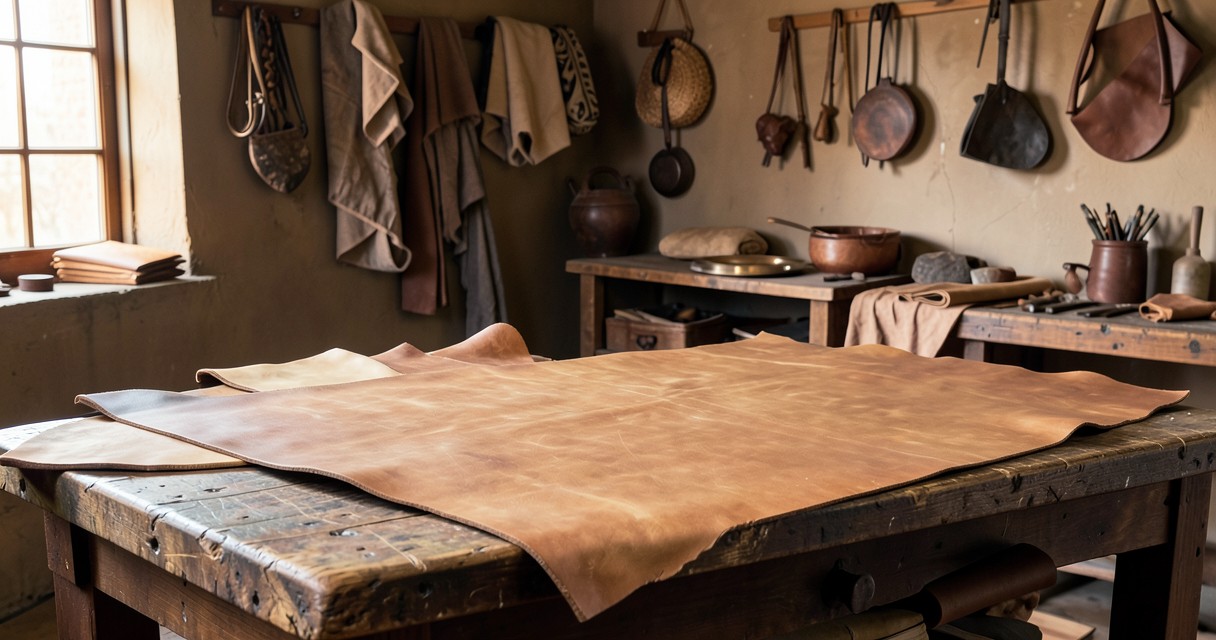
African leather craftsmanship stands at the intersection of ancient tradition and modern luxury, offering a narrative that extends far beyond simple utility. For centuries, the continent has been a repository of exceptional skills, turning raw hides into durable works of art through methods passed down through generations. Today, a new wave of designers and artisans is reclaiming this heritage, positioning Africa not merely as a supplier of raw materials but as a powerhouse of high-end leather goods. This renaissance is driven by a commitment to quality, sustainability and a distinct aesthetic vocabulary that resonates with the global ethno-fashion market.
The Timeless Art of Vegetable Tanning
The foundation of African leather excellence lies in the traditional methods of processing hides, most notably vegetable tanning. This technique, which relies on natural tannins found in tree barks, leaves and roots, contrasts sharply with the rapid chemical processing used in mass production. Artisans in countries like Morocco and Nigeria have perfected these recipes over centuries, resulting in leather that is not only environmentally friendly but also incredibly robust. The process is slow and labour intensive, often taking weeks to complete a single batch, but the outcome is a material that possesses a unique depth of colour and a life that evolves with the owner.
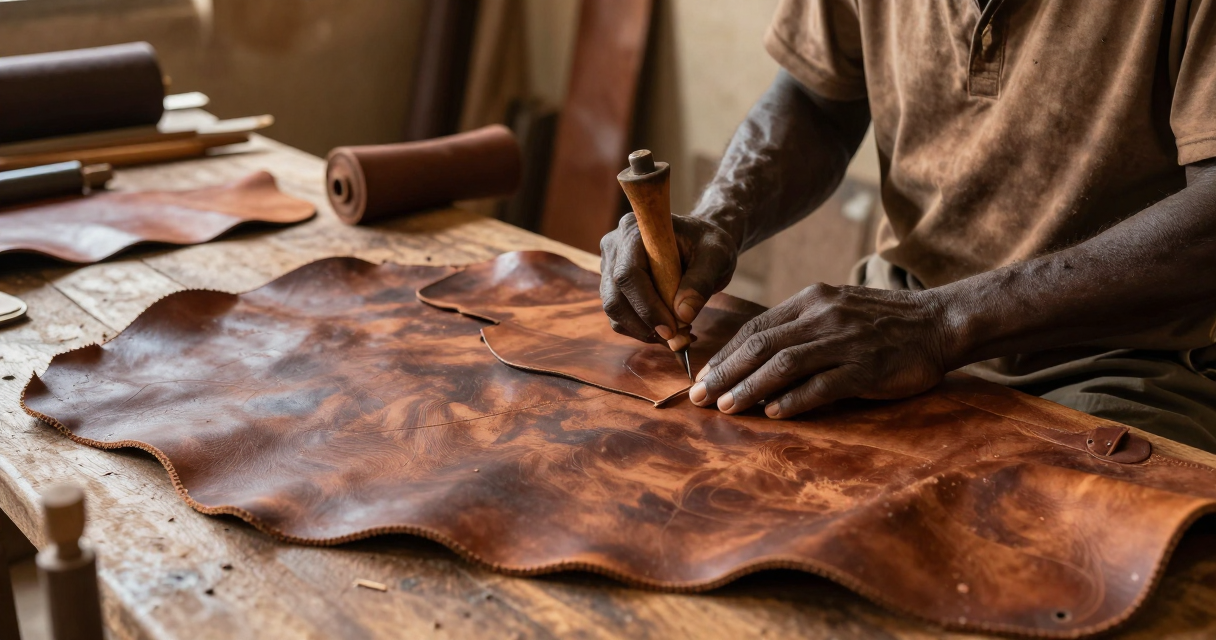
What sets vegetable-tanned African leather apart is its ability to develop a rich patina over time, a characteristic highly prized by connoisseurs of quality goods. Unlike chrome-tanned alternatives, which can feel synthetic and flat, these organic hides breathe and react to the environment, absorbing oils and sunlight to tell a visual story of their journey. This natural ageing process ensures that no two pieces are ever exactly alike, granting the owner a truly bespoke item. For the ethically minded consumer, this method represents a return to slow fashion, where the environmental footprint is minimised and the connection between the creator and the creation remains tangible.
Furthermore, the sourcing of hides is often integral to the local agricultural cycle, ensuring that waste is minimised and the economic benefits remain within rural communities. Skinned hides are treated with care from the very beginning, often by the same herders who raised the livestock, creating a traceable lineage that is rare in the modern fashion industry. This holistic approach to craftsmanship challenges the disconnect found in fast fashion and offers a model where quality and responsibility are inextricably linked. The result is a product that feels earthy yet sophisticated, bridging the gap between rustic utility and high-end design.
The Lagos Leather Fair as a Catalyst for Change
In recent years, the Lagos Leather Fair has emerged as a pivotal platform for showcasing the immense talent residing within the continent. What started as a local initiative has grown into an internationally recognised event, drawing attention from buyers, media and fashion enthusiasts who are eager to discover the next big name in accessories. The fair provides a critical space for artisans to step out of the shadows of the market stalls and present their work in a curated environment that emphasises design excellence. It is here that the narrative shifts from one of mere handicraft to one of serious fashion and commercial viability.
The impact of this gathering extends beyond the few days of the event, as it fosters a sense of community and healthy competition among designers. Established brands share the floor with emerging talents, creating a dynamic ecosystem where mentorship and collaboration thrive. This visibility is essential for challenging the outdated perceptions of African design being limited to tourist curios. Instead, visitors are confronted with sleek silhouettes, innovative structural designs and a level of finishing that rivals established European luxury houses. The fair effectively acts as a launchpad, propelling local businesses onto the global stage.
Moreover, the Lagos Leather Fair has become a forum for difficult but necessary conversations about the industry’s future, including infrastructure, funding and export logistics. By bringing these issues to the forefront, the organisers are helping to dismantle the barriers that have historically prevented African brands from scaling. The energy generated by this collective effort is palpable, signalling a shift in the global fashion hierarchy. It proves that with the right support and exposure, African leather goods can dominate the international market, not just for their cultural novelty but for their inherent commercial and artistic value.
Integrating Artificial Intelligence with Traditional Skills
A fascinating development within the sector is the cautious integration of artificial intelligence to enhance rather than replace traditional craftsmanship. While the image of African leather work is often associated with hand tools and manual labour, forward-thinking designers are beginning to explore how digital tools can optimise their production. AI is being utilised to analyse trends and predict consumer behaviour, allowing artisans to create designs that are more likely to succeed in competitive international markets. This data-driven approach helps in reducing waste by ensuring that production runs are aligned with actual demand.
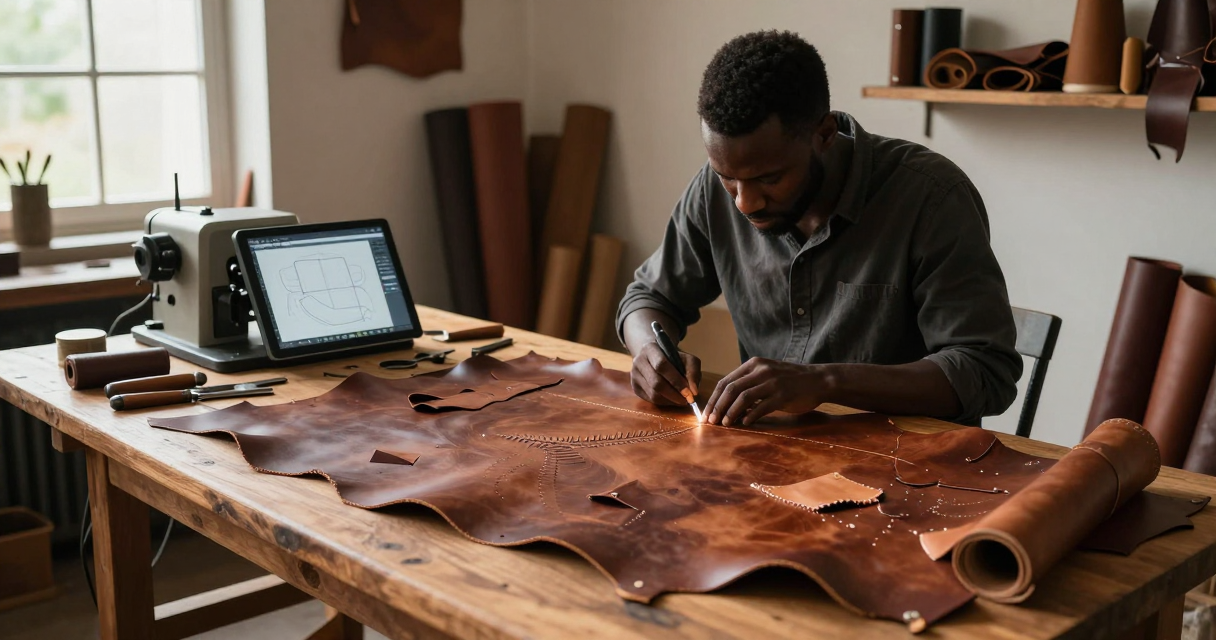
In the workshop itself, technology is aiding in the precision cutting of patterns, which maximises the usage of every hide and minimises offcuts. This is particularly important when working with premium leather, where every scrap of material holds value. By using algorithms to generate the most efficient cutting layouts, craftsmen can save time and resources without compromising the integrity of the handmade assembly. The stitching, burnishing and finishing are still performed by human hands, preserving the soul of the product, while the preparatory stages benefit from digital efficiency.
This hybrid model represents a pragmatic approach to modernisation, respecting the limits of manual labour while embracing the benefits of innovation. It allows small studios to punch above their weight, producing goods that meet the rigorous standards of global luxury retailers. The narrative of the Lagos Leather Fair 2026, which interrogates the future of AI in craftsmanship, highlights this transition not as a threat to tradition but as a necessary evolution. It suggests that the future of African fashion lies in the ability to merge the irreplaceable touch of the artisan with the analytical power of modern technology.

I’m fascinated by the vibrant intersection of contemporary fashion and traditional African craftsmanship. I spend my free time exploring markets, learning about textile techniques, and sharing the stories behind each piece with our readers.