
The Symbolic Language of African Ceremonial Clothing
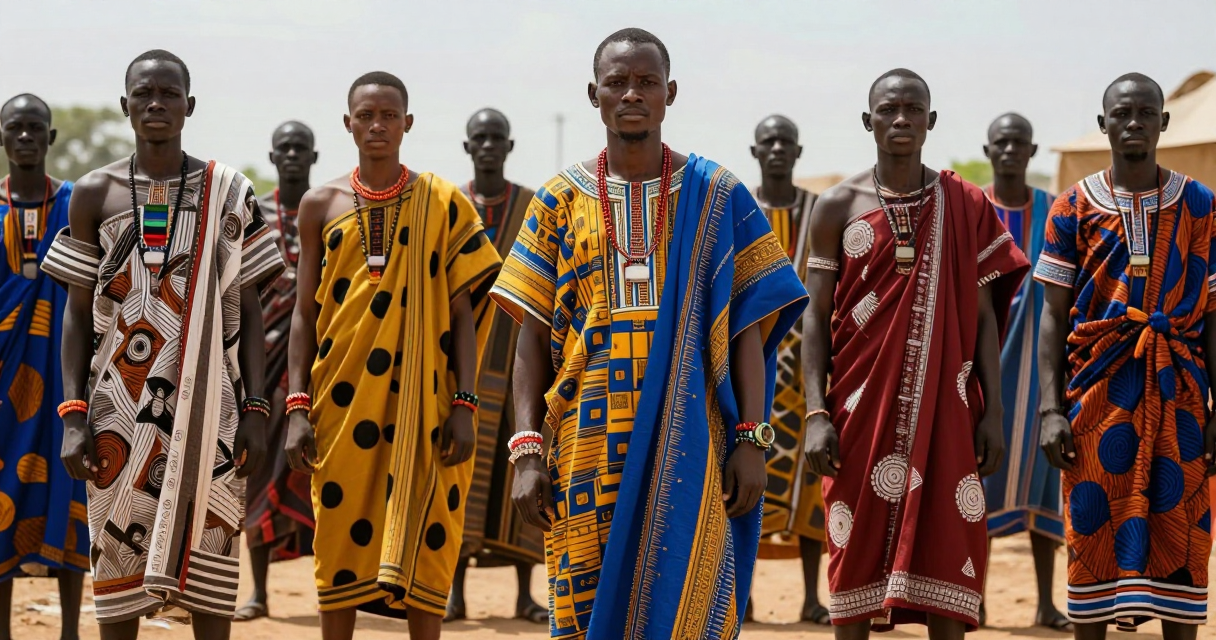
African ceremonial clothing is not merely fabric draped over the body. It is a living archive of identity, status and spiritual belief, woven into every thread and dyed into every pattern. Across the continent, garments worn during rites of passage, coronations and harvest festivals carry precise meanings that have been passed down through generations. In Nigeria, the Yoruba aso-oke cloth is divided into three distinct types, etu, sanyan and alaari, each reserved for specific occasions and social ranks. The etu, with its deep indigo stripes, is traditionally worn by elders during funerals, while the lighter sanyan, woven from silk and cotton, appears at weddings and chieftaincy installations. These distinctions are not arbitrary; they reflect a complex hierarchy that governs who may wear what, when and why.
Beyond Nigeria, the Maasai of Kenya and Tanzania use beadwork to communicate age, marital status and even the number of children a woman has borne. A young warrior’s shuka, wrapped in bold red and blue, signals his readiness for battle and marriage, while an elder’s more subdued palette indicates wisdom and authority. The colours themselves are never random; red symbolises bravery and the blood of the community, blue represents the sky and the sustenance it provides. These garments are not static museum pieces but dynamic texts that evolve with the wearer’s life journey, making them one of the most expressive forms of African craftsmanship.
Textile Techniques That Define Ceremonial Attire
The making of African ceremonial clothing relies on techniques that have been refined over centuries, often within tightly guarded family lineages. In West Africa, the adire cloth of the Yoruba is created using resist-dyeing methods, where cassava paste or wax is applied to fabric before it is dipped in indigo dye. The resulting patterns, geometric, floral or abstract, are not just decorative but encode proverbs and historical events. A single adire wrapper can take up to three months to complete, with each layer of dye requiring days of drying under the sun. The process is labour-intensive, and the skill is so specialised that only a handful of artisans in cities like Abeokuta still practice it in its traditional form.
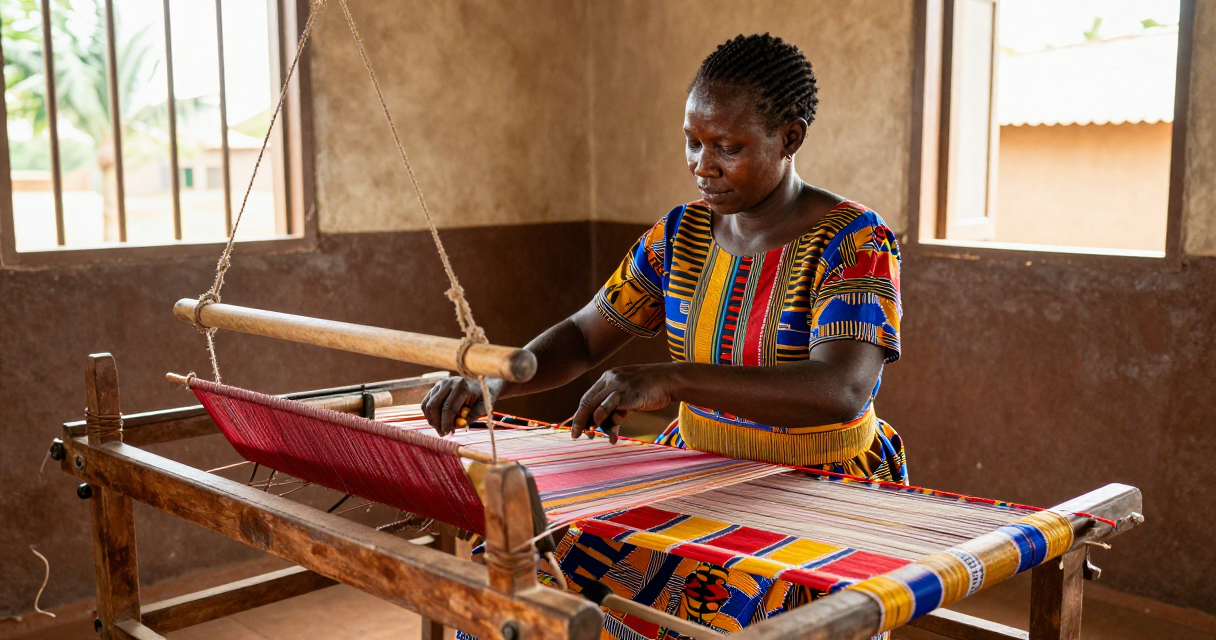
Further east, the kente cloth of the Akan people in Ghana is woven on narrow strip looms, with each strip measuring about four inches wide. These strips are then sewn together to form larger panels, which are draped as togas or wrapped as skirts. Kente is not merely cloth; it is a visual language. The pattern known as “Ese Ne Tekrema,” meaning “the teeth and the tongue,” symbolises friendship and interdependence, while “Sika Futuro,” or “gold dust,” represents wealth and royalty. The weavers, predominantly men, often work in communal settings, with apprentices learning the craft over years of observation and practice. The dyes used in kente are derived from natural sources, bark, roots and leaves, ensuring that the colours remain vibrant even after decades of wear.
Regional Variations in Ceremonial Dress
The diversity of African ceremonial clothing is as vast as the continent itself, with each region developing its own distinct styles and materials. The habesha kemis, a hallmark of Ethiopian textile traditions, exemplifies the elegance of embroidered cotton dresses worn during religious festivals and weddings. The embroidery, known as tibeb, is often done by hand using silk or metallic threads, and the motifs vary from region to region. In the northern highlands, geometric designs dominate, while in the south, floral patterns are more common. The dress is typically paired with a shawl called a netela, which is draped over the shoulders and can be used to cover the head during prayer or as a sign of respect.
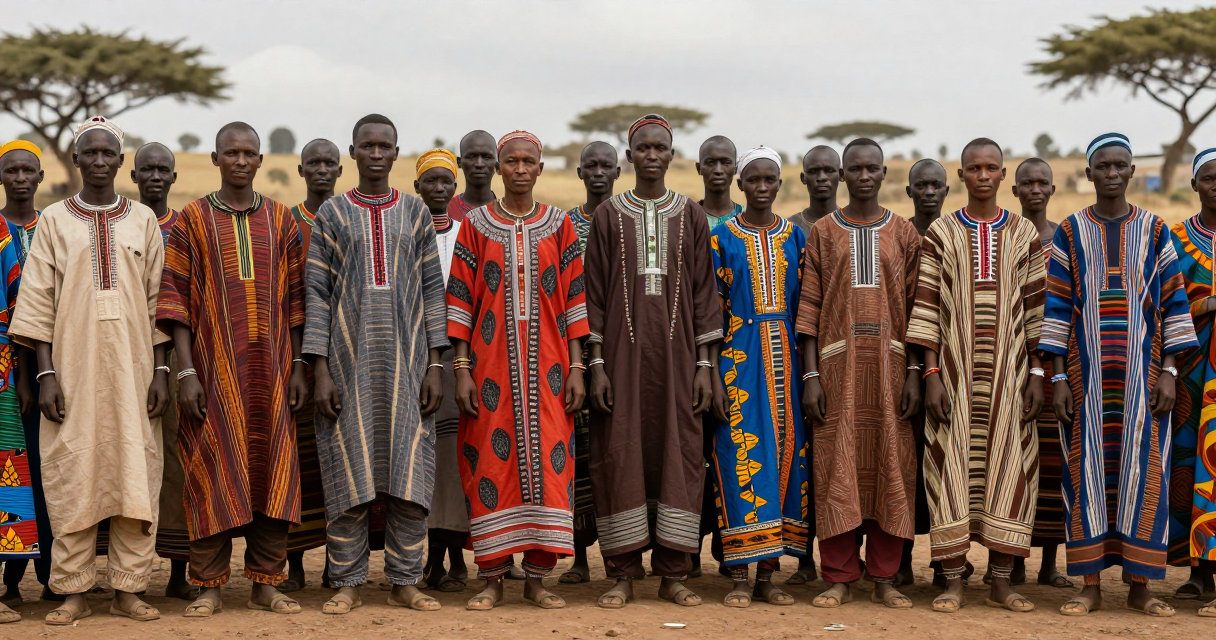
In Mali, the bogolanfini, or mud cloth, is a staple of ceremonial attire, particularly among the Bambara people. The fabric is dyed using fermented mud, which reacts with the tannins in the cloth to create deep brown and black patterns on a beige background. The process is entirely natural and can take up to a year to complete, as the mud must be applied in layers and left to dry between each application. The patterns on bogolanfini are not merely decorative; they tell stories of protection, fertility and ancestral blessings. A bride might wear a bogolanfini wrapper adorned with motifs representing her family’s lineage, while a hunter’s garment would feature symbols of strength and courage.
The Role of Beadwork in Ceremonial Garments
Beadwork is one of the most intricate and symbolic elements of African ceremonial clothing, particularly in southern and eastern Africa. For the Zulu people, Traditional bead colours and their meanings form a complex language, where each hue and pattern communicates distinct messages. A young woman’s isicholo, a beaded headdress, might feature white beads to signal purity, while red beads indicate love or passion. The arrangement of the beads is equally important; a single misplaced bead can alter the meaning entirely. Beadwork is not limited to women; Zulu men wear beaded belts and necklaces during ceremonies, with the size and complexity of the beads reflecting their social status.
In Botswana, the San people use ostrich eggshell beads to create intricate necklaces and aprons worn during healing dances and initiation rites. The beads are painstakingly crafted by hand, with each one taking hours to shape and polish. The process begins with the collection of ostrich eggshells, which are then broken into small pieces and ground into round beads using a stone. The beads are strung onto sinew or plant fibres, with the patterns often reflecting the natural world, spirals, zigzags and dots that mimic animal tracks or celestial bodies. These garments are not just worn; they are performed, with the beads rattling rhythmically during dances to invoke ancestral spirits.
Ceremonial Clothing in Modern African Fashion
Modern African designers are innovatively incorporating African tribal jewelry designs into their reinterpretations of ceremonial clothing, merging heritage with contemporary style. Lagos-based designer Lisa Folawiyo has gained international acclaim for her use of ankara fabric, a brightly patterned wax print that originated in the Netherlands but has been adopted and adapted across West Africa. Folawiyo’s designs often feature intricate beadwork and embroidery, transforming ankara into high-fashion garments that retain their ceremonial significance. Her 2022 collection, for example, included a floor-length gown with a beaded bodice, worn by a bride during a traditional Yoruba wedding before being showcased on the runway in Paris.
In South Africa, designer Laduma Ngxokolo of MaXhosa Africa has revitalised Xhosa beadwork and knitwear, creating garments that are both contemporary and deeply rooted in tradition. His designs often incorporate the geometric patterns found in Xhosa beadwork, reimagined in wool and mohair. Ngxokolo’s work is particularly notable for its use of colour; his knitwear features bold, clashing hues that reflect the vibrancy of Xhosa ceremonial attire. These modern interpretations are not about erasing tradition but expanding its reach, making ceremonial clothing accessible to new audiences while preserving its cultural integrity.
Preserving the Craftsmanship Behind Ceremonial Clothing
The survival of African ceremonial clothing depends on the transmission of craftsmanship from one generation to the next, a process that is increasingly under threat from mass production and globalisation. In Ghana, the kente weavers of Bonwire are working to ensure that their skills are not lost by establishing apprenticeship programmes and cooperatives. These initiatives provide young weavers with the tools and knowledge needed to continue the tradition, while also offering them a sustainable livelihood. The cooperatives often collaborate with designers to create contemporary pieces, ensuring that kente remains relevant in today’s fashion landscape.
Similarly, in Nigeria, organisations like the Nigerian Textile Manufacturers Association are advocating for the preservation of traditional dyeing techniques, such as adire and akwete. These efforts include setting up training centres where artisans can learn the craft and access markets for their work. The challenge is not just technical but economic; many young people are drawn to more lucrative careers, leaving the future of these crafts uncertain. However, the growing interest in sustainable and ethically produced fashion has created new opportunities for African artisans, with consumers increasingly seeking out handmade, culturally significant garments.
The Spiritual and Social Significance of Ceremonial Attire
African ceremonial clothing is deeply intertwined with spirituality, serving as a bridge between the physical and spiritual worlds. Among the Dogon people of Mali, the kanaga mask and accompanying garments are worn during the dama, a funeral ritual that guides the soul of the deceased to the afterlife. The mask, carved from wood and painted with symbolic patterns, is worn with a raffia costume that covers the entire body. The wearer moves in a series of precise, ritualistic dances, with the costume acting as a vessel for ancestral spirits. The colours and materials used in the costume are chosen for their spiritual properties; white represents purity and the afterlife, while red symbolises the life force of the community.
In Zimbabwe, the Shona people use ceremonial clothing to honour the ancestors during the bira, a ritual of spirit possession. The garments worn during the bira are often made from black or dark blue fabric, with white beads and shells sewn into the seams. These materials are believed to attract the spirits, allowing them to communicate with the living. The clothing is not just worn; it is activated through song, dance and the burning of incense, creating a multisensory experience that transcends the physical. For the Shona, as for many African cultures, ceremonial clothing is not a passive adornment but an active participant in the spiritual life of the community.

I’m fascinated by the vibrant intersection of contemporary fashion and traditional African craftsmanship. I spend my free time exploring markets, learning about textile techniques, and sharing the stories behind each piece with our readers.