
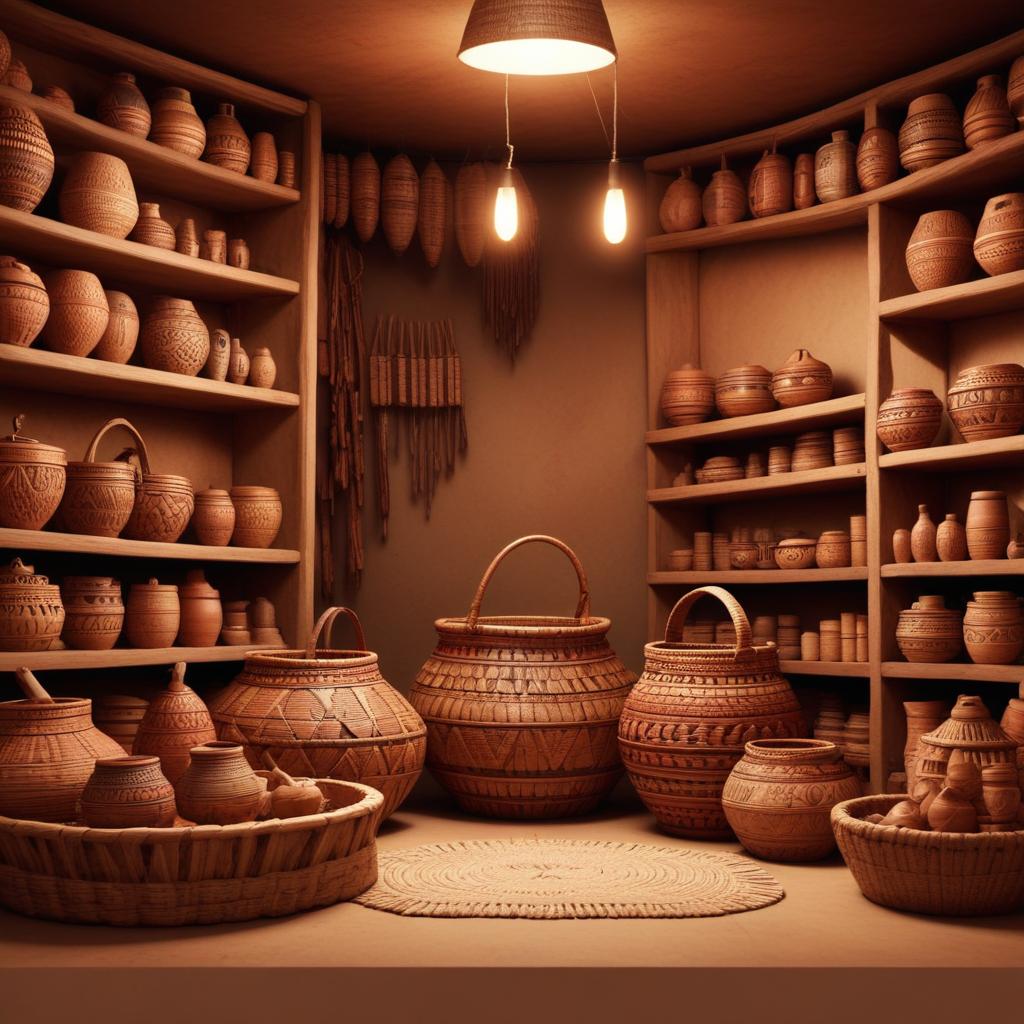
Understanding Storytelling in African Craft Design
Storytelling is fundamental to African craft design, serving as an important link between historical traditions and modern cultural identities. The detailed patterns, symbols, and motifs found in crafts allow artisans to convey narratives that span generations, rendering storytelling a crucial component of African craftsmanship. This narrative dimension elevates each item from simple decorative art to a significant means of cultural expression.
In numerous African societies, crafts transcend mere functionality; they embody visual narratives woven into textiles, intricately carved in wood or adorned on pottery. Every piece conveys a specific message or tale, frequently associated with myths, significant historical occurrences, or moral teachings that have been transmitted through the ages. The art of storytelling within African craft design safeguards these vibrant narratives, enabling them to endure in a physical form while nurturing a sense of identity and continuity.
The importance of storytelling in African craft is evident in its capacity to embody the values, beliefs, and social norms of a community. Crafts serve as cultural repositories, encapsulating shared memories and maintaining heritage amid the pressures of modernisation and globalisation. Artisans employ their talents not just to produce visually striking works but also to protect traditions культурных корней.
In addition, storytelling в африканском ремесле plays an important educational role. By illustrating narratives through visuals, crafts convey intricate concepts and historical narratives to younger audiences in a way that is easy to understand. This educational aspect guarantees that information regarding heritage, spirituality, and social responsibilities is preserved and valued, integrating cultural education into daily life via craft creation.
Ultimately, African craft represents an evolving medium of storytelling that showcases the variety and depth of cultures throughout the continent. It enables communities to affirm their identity, connect with their heritage, and convey their distinct viewpoints to a global audience. Through this lasting practice, storytelling remains an essential component of cultural expression, infusing vitality and significance into African craft design.
Historical Roots of Storytelling in African Crafts
The history of African craft design is deeply intertwined with the art of storytelling, a practice that has shaped the cultural identity of communities for centuries. Traditional crafts have long served not only as functional objects but also as vessels for narrative, embedding stories that pass down wisdom and heritage through generations. This rich storytelling tradition is firmly rooted in oral traditions, which have been central to African culture since ancient times.
Oral traditions in Africa encompass myths, legends, proverbs, and historical accounts, all of which give meaning to crafted objects such as textiles, pottery, beadwork, and carvings. These crafts often act as symbolic representations of community values, ancestral lineage, and spiritual beliefs. The motifs and patterns incorporated into the designs are not merely decorative; they communicate stories that connect the past with the present, preserving history in a tangible form.
Within many African communities, craft-making is a communal activity where elders and artisans collaborate to ensure that the narratives and cultural knowledge are faithfully transmitted. The history behind these traditional crafts highlights how the storytelling aspect serves not only as entertainment but as a crucial method of education, identity preservation, and social cohesion. Through these interconnected oral and material traditions, African culture maintains a vibrant and enduring legacy that continues to inspire contemporary craft design.
Symbols and Motifs as Story Elements
African craft design is richly imbued with symbols и мотивы that serve as powerful story elements, conveying profound cultural meanings. These visual components are not merely decorative; they are integral to narrating traditional tales и beliefs unique to various communities across the continent. Each symbol and motif holds significance, often connected to ancestry, spirituality, or social messages.
Common symbols found in African crafts include the Adinkra symbols of Ghana, which represent concepts like wisdom, strength, and unity. For example, the “Gye Nyame” symbol signifies the supremacy of God and is a recurring motif in textiles and pottery. Similarly, the Ndebele tribe uses geometric patterns and vibrant colours in beadwork and mural art to tell stories of identity, heritage, and social status.
Motifs such as animals, plants, and abstract shapes often carry layered meanings. The elephant, for instance, may symbolise power and wisdom, while the use of spirals or zigzags can represent life’s journey or the connection between the physical and spiritual worlds. These motifs act as a visual language that helps preserve oral histories and cultural wisdom through generations.
In essence, the symbols and motifs within African craft design provide a narrative framework that enriches the objects beyond their aesthetic appeal. They allow artisans to express complex stories and cultural identities, making each crafted piece a meaningful artefact with deep-rooted significance in African heritage.
The Impact of Storytelling on Contemporary African Craft

Storytelling holds a profound influence over contemporary craft in Africa, serving not only as a creative inspiration but also as a vital tool for cultural preservation and identity evolution. Modern artisans frequently draw upon traditional narratives, myths, and communal histories which are embedded in the fabric of their societies. This storytelling impact roots their craft in authenticity while allowing for innovation and adaptation to today’s cultural landscapes.
In many African cultures, craft objects are far more than decorative or utilitarian—they are carriers of stories and symbols that communicate ancestral wisdom, historical events, and spiritual beliefs. Contemporary craft practitioners harness these stories to infuse their work with deeper meaning and context. For example, textiles, ceramics, and beadwork often incorporate motifs and patterns that reference specific tales or societal values, bridging the gap between past and present.
Modern artisans are not mere replicators of tradition but active storytellers who reinterpret and reimagine their cultural heritage through their craft. This dynamic process ensures that cultural narratives are not static but evolve, reflecting current realities and aspirations while honouring ancestral roots. Storytelling enables these craftspeople to address contemporary issues—such as identity, social change, and globalization—through their art, creating a dialogue between generations and audiences worldwide.
The storytelling impact is particularly significant in the way it contributes to cultural preservation. Crafts that incorporate narrative elements help safeguard intangible heritage that may otherwise be at risk of fading amid rapid urbanisation and cultural homogenisation. By embedding stories in their work, artisans keep oral histories alive, transmitting knowledge and values across time and space through tangible, crafted pieces.
Moreover, the role of storytelling in contemporary craft supports the economic empowerment of artisans by attracting global interest in culturally rich, meaningful products. Consumers increasingly appreciate crafts that tell a story, valuing the connection to a heritage that is both preserved and contemporary. This encourages artisans to continue their creative practices, fostering sustainable livelihoods intertwined with cultural stewardship.
In conclusion, storytelling shapes contemporary African craft by reinforcing cultural identity, inspiring creativity among modern artisans, and ensuring the preservation and progression of rich cultural legacies. Through this enduring narrative tradition, African crafts remain vibrant, meaningful, and relevant in the modern world.
Storytelling Techniques Among Modern African Artisans
Contemporary African artisans utilise a diverse range of storytelling techniques to convey their rich cultural heritage through craft methods. These techniques often blend traditional practices with innovative approaches, creating unique narratives that reflect both history and modern identity. Through intricate beadwork, weaving, carving, and pottery, artisans embed stories which articulate community values, ancestral legends, and social commentary.
One prominent storytelling style involves symbolism and motifs, where artisans incorporate specific patterns and colours that hold deep meaning within their communities. These symbols serve as visual languages that communicate history, spiritual beliefs, or social status. Additionally, narrative sculpture is a technique embraced by many, with carvings designed to depict ancestral tales or important events, transforming static objects into living stories.
Textile crafts such as kente weaving and bogolanfini dyeing also offer powerful storytelling methods. Artisans select colours and designs to encode messages, often representing proverbs, moral lessons, and historical moments. These stories woven into fabric become a wearable history, ensuring cultural preservation with every thread.
Modern African artisans often combine these traditional techniques with contemporary materials and aesthetics, allowing for new storytelling styles that resonate with wider audiences. This fusion highlights the adaptability of African craft methods, keeping heritage alive while pushing creative boundaries. Ultimately, the storytelling techniques of these artisans are crucial in maintaining a living connection to African identity and history through their expressive craftwork.
Economic and Social Benefits of Storytelling Crafts
Storytelling in African craft design plays a pivotal role in supporting local economies by creating unique products that resonate with both domestic and international markets. Crafts embedded with narratives not only showcase artistic skill but also carry the cultural heritage of communities, thereby enhancing the economic benefits for artisans. These storytelling crafts often command premium prices in the craft industry due to their distinctive value, helping to sustain livelihoods and encourage the continuation of traditional practices.
Beyond economic advantages, the social impact of storytelling crafts is profound. By weaving tales and traditions into their creations, artisans foster a sense of identity and belonging within their communities. This process strengthens social cohesion, as shared histories and cultural values are preserved and passed down through generations. Storytelling crafts become communal symbols, promoting unity and pride among local populations.
Furthermore, these culturally rich crafts significantly attract cultural tourism, inviting visitors eager to experience authentic African heritage firsthand. Tourists drawn to storytelling crafts contribute to the growth of cultural tourism, which in turn injects additional revenue into local economies. This symbiotic relationship enhances the visibility of African craft industries globally and encourages cross-cultural appreciation, ensuring that the narratives embodied in these crafts continue to thrive.
Preserving and Promoting African Storytelling Through Craft Design

The preservation and promotion of African storytelling through craft design is vital to maintaining the continent’s rich cultural heritage. Storytelling is woven deeply into the fabric of African crafts, serving as a medium not only for artistic expression but also for passing down history, values, and traditions from generation to generation. Various strategies have been implemented to safeguard this storytelling legacy while simultaneously promoting it on a global scale.
One key strategy involves supporting local artisans by providing them with platforms and resources to maintain traditional storytelling techniques within their crafts. Many community-based organisations focus on training and capacity building, ensuring that younger generations become skilled in both craft-making and the narrative elements that accompany them. This intergenerational transfer of knowledge supports the preservation of storytelling practices in a sustainable way.
In addition, collaboration between artisans and cultural institutions plays an important role in the promotion of African crafts worldwide. Museums, galleries, and cultural festivals now actively include craft exhibitions that highlight storytelling elements, bringing wider attention to these art forms beyond their regions of origin. By contextualising the pieces within their storytelling traditions, these initiatives educate global audiences about the significance behind the designs, fostering deeper appreciation and respect.
Digital technology and social media are also powerful tools in this preservation and promotion effort. Online marketplaces enable artisans to reach international customers directly, showcasing crafts imbued with African storytelling. Social platforms serve as spaces where narratives can be shared via videos, storytelling sessions, and tutorials, broadening the reach of these art forms. Furthermore, digital archiving projects ensure that stories connected to the crafts are recorded and made accessible for future generations.
Governments and non-profit organisations contribute through policy support and funding initiatives aimed at cultural preservation. Grants and awards recognise artisans who excel in incorporating storytelling into their work, encouraging innovation while respecting traditional methods. Educational programmes integrated into schools also promote awareness of African crafts and their storytelling heritage, cultivating pride and continuity from an early age.
Thus, through combined efforts involving community empowerment, institutional collaboration, digital innovation, and policy backing, the storytelling legacy within African crafts is both preserved and promoted on a global stage. These initiatives ensure that African storytelling remains a vibrant force in craft design, continuing to inspire and connect people across cultures and generations.
Educational Programs and Workshops
Education plays a vital role in preserving the rich traditions of African craft design, particularly through dedicated programmes that combine craft training with storytelling skills. Across various communities, workshops have been established to engage younger generations, offering hands-on experience in traditional craft techniques alongside the narratives that give these creations their deeper meaning.
These educational efforts often take the form of community workshops where elders and skilled artisans impart knowledge in pottery, weaving, beadwork, and other crafts, while also teaching the art of storytelling. By intertwining craft training with oral histories and storytelling methods, the programmes ensure that cultural context is passed down, nurturing both practical and interpretative skills.
Many organisations support these initiatives by creating curricula that highlight the importance of storytelling as a means of cultural expression and preservation. Workshops encourage participants not only to master the physical craft but also to appreciate the stories behind symbols, patterns, and designs, fostering a deeper understanding of African heritage. This dual focus revitalises interest among youth, making the continuation of traditional crafts more sustainable.
By embedding storytelling skills within craft training, educational programmes serve as a bridge linking past and future generations. They empower young people to become both creators and storytellers, ensuring that African craftsmanship continues to thrive as a vibrant cultural practice enriched by the powerful narratives it embodies.
Leveraging Digital Media and Global Platforms
In today’s interconnected world, digital media plays a pivotal role in the global promotion of African crafts. Artisans and designers are increasingly harnessing online platforms such as Instagram, Pinterest, and Etsy to reach international audiences eager to discover unique, story-rich pieces. These digital spaces not only serve as marketplaces but also as storytelling channels where the cultural heritage and intricate narratives behind each craft can be vividly shared.
By embedding storytelling in their craft marketing strategies, African designers can convey the meaning and significance behind their work, often rooted in centuries-old traditions. Videos, blogs, and social media posts allow creators to highlight the symbolism, materials, and techniques that define their crafts. This approach not only educates global consumers but also fosters a deeper appreciation and emotional connection, enhancing the crafts’ perceived value.
Moreover, digital media facilitates collaborations and exposure beyond geographical limits. Platforms like YouTube provide tutorials and behind-the-scenes looks at the crafting process, offering authenticity and transparency that further promote African artistry. Global promotion via these online platforms empowers artisans to build sustainable businesses while preserving and sharing their stories, ensuring that African crafts continue to thrive on a worldwide stage.

I’m fascinated by the vibrant intersection of contemporary fashion and traditional African craftsmanship. I spend my free time exploring markets, learning about textile techniques, and sharing the stories behind each piece with our readers.