

Top African Textile Traditions to Know
African textiles embody a deep-rooted heritage and showcase the extraordinary diversity of textile techniques found throughout the continent. With their elaborate designs and vibrant hues, African fabric craftsmanship transcends mere ornamentation—it stands as an important emblem of cultural identity, historical significance, and social importance. Every item of traditional fabric tells its unique tale, frequently reflecting the customs, beliefs, and principles of the communities that create them.
Passed down through generations, these textile techniques maintain traditional craftsmanship such as weaving, dyeing, and embroidery. African fabrics are cherished not only in local cultures but have also influenced global fashion and art. The use of meaningful patterns and natural fibres connects people to their heritage, guaranteeing that these time-honoured garments continue to play an essential role in ceremonies, celebrations, and everyday life.
Exploring African weaving uncovers a vibrant tapestry of tradition, where expert craftsmanship intertwines with age-old narratives. Understanding these fabric techniques provides insight into the continent’s diverse communities and their unwavering commitment to preserving their artistic heritage through textiles. This article examines several of the most notable and revered instances of African textile art, celebrating their enduring significance and cultural worth.
Kente Cloth of Ghana
Kente cloth is a significant symbol of Ghanaian weaving, renowned worldwide for its vivid colours and intricate designs. Originating from the Ashanti Kingdom, this fabric has a rich history that stretches back for centuries. It is typically crafted by skilled weavers using traditional techniques that require considerable expertise and commitment. Traditionally, this textile was reserved for royalty and important occasions, underscoring its esteemed position in Ghanaian culture.
At the heart of African textile heritage lies Kente cloth, celebrated for its distinctive range of motifs, each design carrying its own unique meaning. These timeless patterns do more than simply adorn; they convey narratives, reflect proverbs, honour significant historical events, and represent philosophical thoughts. The colours are selected meticulously to complement the designs, with each hue symbolising specific ideas—for example, gold signifies wealth and nobility, while green represents growth and renewal.
The creation of Kente cloth entails a detailed and careful weaving technique. Expert craftsmen use narrow strip looms to generate slender strips of fabric, which are later sewn together to form larger textiles. This labor-intensive process can take several weeks to finish a single piece, showcasing the profound dedication involved in the artistry. Additionally, the use of silk and cotton threads enhances the luxurious nature of the fabric, highlighting its esteemed significance in traditional Ghanaian culture.
Alongside its rich historical and cultural significance, Kente fabric continues to play an essential role in contemporary Ghana and throughout the African diaspora. It is frequently donned during important events such as weddings, funerals, and major celebrations, representing unity, pride, and cultural heritage. Additionally, modern fashion designers have embraced Kente, incorporating its patterns and hues into current clothing, accessories, and home decor, thereby preserving the legacy of Ghanaian textiles in new environments.
Ultimately, the cultural importance of Kente cloth arises from its ability to represent and communicate Ghana’s values, history, and traditions through the artistry of African weaving. Its enduring appeal demonstrates how traditional Kente patterns continue to influence and inspire, seamlessly connecting the past with the present in a remarkable display of identity and creativity.
Symbolism in Kente Patterns
Kente cloth, hailing from the Ashanti community in Ghana, is celebrated for its deep symbolism and elaborate patterns. Every Kente piece transcends mere fabric; it serves as a woven tale infused with African cultural aspects that convey stories, principles, and historical moments.
Common designs found in Kente cloth – including Eban (the fence), Adwinasa (all motifs are used up), and Fawohodie (freedom) – each hold significant meanings linked to themes of protection, unity, and liberation, respectively. These designs are frequently geometric and intricately stylised, acting as visual symbols that express moral teachings and cultural heritage.
The hues found in Kente carry specific symbolic interpretations. Gold represents nobility, prosperity, and spiritual awakening; green denotes growth, fertility, and rejuvenation; blue embodies peace and harmony; red expresses political and spiritual sentiments, frequently associated with struggle and sacrifice; black signifies maturity, heightened spiritual energy, and grief. This vivid spectrum enhances the profound messages intricately interwoven into the fabric’s pattern.
The diverse patterns and hues found in Kente cloth act as a significant form of expression, safeguarding African cultural symbols across time. Donning a particular Kente design can represent an individual’s status, accomplishments, or connections, rendering it a vital symbol of identity and heritage within African communities.
Traditional Weaving Techniques
The art of hand weaving is central to the creation of authentic Kente fabric, a celebrated textile from Ghana that embodies traditional craftsmanship at its finest. The process begins with the preparation of brightly coloured silk or cotton threads, which are carefully dyed using natural and synthetic methods. These threads are then arranged on a narrow strip loom, a specialized tool that allows weavers to produce long, narrow strips of fabric that are later sewn together.
Skilled artisans utilise intricate loom techniques to weave threads into geometric shapes and significant symbols that carry cultural value. Hand weaving requires precision and expertise, as the craftsman navigates the warp and weft to create unique, vibrant designs. Each piece of Kente cloth is crafted thread by thread, a process that can take several days depending on the complexity of the design.
Traditional craftsmanship is evident not only in the weaving but also in the preparation and finishing stages. Weavers often inherit these skills through generations, preserving the heritage and storytelling unique to their community. The loom itself is a manual contraption, usually made of wood, and demands both strength and coordination to operate effectively. Through this combination of tools, skills, and patience, authentic Kente fabric remains a testament to the rich textile traditions of Africa.
Bogolanfini (Mud Cloth) from Mali
Bogolanfini, often called Mud Cloth, is an extraordinary traditional fabric from Mali that plays a crucial role in the nation’s textile legacy and African dyeing traditions. This craft has been passed down through generations and is intricately linked to the culture of the Bambara people. Unlike fabrics dyed with natural plant colours, Bogolanfini utilises a unique dyeing technique involving fermented mud, resulting in rich earthy tones and intricate designs that tell stories and reflect social significance.
The making of Bogolanfini begins with woven cotton cloth, typically handspun and handwoven by Malian artisans. The raw fabric is first soaked in a dye bath made from leaves, which gives it a yellowish hue. Once dried, the cloth is painted by hand with a special ferrous mud that has been collected from riverbanks and allowed to ferment for up to a year. The mud is applied using sticks or brushes to create complex motifs that are symbolic rather than purely decorative. Patterns often represent proverbs, historical events, or social status, serving as a visual language within the community.
After the mud application, the cloth is left to dry in the sun, allowing chemical reactions between the mud and the fabric to develop darker hues, typically black or deep brown. The mud is then washed off, but its effect remains in the dyed fibres. This process may be repeated several times to intensify the colours. Additional patterns may be created by applying resist techniques or by further dyeing with natural plant-based pigments, showcasing a mastery of African dyeing techniques unique to Mali textiles.
Culturally, Bogolanfini holds profound social significance. It is customarily donned during important ceremonies, rites of passage, and festivities, serving as a symbol of identity and safeguarding. Each design embodies particular meanings — for instance, certain patterns are thought to repel malevolent spirits, whereas others signify an individual’s standing within the community or impart wisdom inherited through generations. This cultural legacy not only maintains Mali’s vibrant history but also links modern wearers to their forebears.
At present, Bogolanfini is acknowledged globally as a form of artistic expression and a lively tradition within Malian textiles. Its impact has extended beyond local confines, captivating designers and textile aficionados around the globe who appreciate the intricate craftsmanship and deep cultural stories woven into each Mud Cloth item. As a testament to the dyeing traditions of Africa, Bogolanfini remains a point of pride that embodies Mali’s cultural legacy and creativity.
Mud Dyeing Process
The mud dyeing technique is a remarkable method crucial to the production of Bogolanfini fabric, a renowned traditional textile art of the Bambara community in Mali. This distinctive approach employs natural dyes and locally sourced materials to create elaborate, symbolic patterns that express stories or cultural significance. The process starts with a handwoven cotton cloth, which is initially immersed in a dye made from leaves, bark, or roots, usually resulting in a yellowish or light brown base hue. This primary dye is entirely natural, emphasising a profound relationship with the environment.
Once the fabric has taken in the first dye and dried, craftsmen meticulously apply a unique clay mud, abundant in iron oxide sourced from riverbeds, directly onto the fabric to craft striking designs and patterns. This mud is infused with natural pigments that interact with the dyed fabric, resulting in a range of dark brown to black hues as it dries and solidifies. The application of the mud to the fabric is done with sticks or brushes, showcasing motifs that frequently carry symbolic meaning, embodying ideas such as fertility, protection, or community.
After the mud has dried, the fabric undergoes washing to eliminate any remaining dirt, exposing vivid, contrasting designs where the mud has protected the lighter base hue. This interaction between the natural dyes and the mud produces a visually impressive effect that synthetic methods cannot imitate. The mud dyeing technique highlights the creativity of traditional textile artistry and serves as a lasting cultural legacy, safeguarding an ancient craft that is deeply embedded in the African landscape and history.
Cultural Significance and Uses
Bogolanfini, commonly known as mud cloth, embodies significant symbolism within Malian cultures and across African traditions. This handwoven fabric serves more than just an ornamental role; it communicates a range of meanings, telling stories, reflecting social hierarchy, and documenting history through its detailed designs and patterns. Each symbol featured on the cloth signifies particular ideas, such as characteristics of animals, pivotal historical moments, or moral proverbs, transforming Bogolanfini into a visual language that safeguards collective wisdom.
In ceremonial settings, Bogolanfini is often worn or showcased during key life events such as weddings, initiations, and funerals. The fabric’s presence at these occasions highlights its importance as a cultural symbol, setting apart participants and paying tribute to tradition. For instance, in rites of passage, particular patterns might be selected to represent the transformation the individual is experiencing, connecting them to their ancestral roots and sense of belonging within the community.
Storytelling plays an essential role in Bogolanfini, where the designs act as memory aids for oral traditions and stories. Elders and griots frequently employ the symbols interlaced in the fabric during their narratives, helping to pass down lessons and cultural values to younger generations. By donning or showcasing Bogolanfini, individuals actively engage in the safeguarding and sharing of Malian heritage.
Traditional clothing featuring Bogolanfini is profoundly embedded in Malian culture, serving both daily and ceremonial purposes. Craftspeople carefully craft garments that merge functionality with meaningful design, upholding the fabric’s status as a potent symbol of African heritage. Its continual existence allows Bogolanfini to strengthen cultural identity and foster unity throughout Mali.
Shweshwe Fabric of Southern Africa
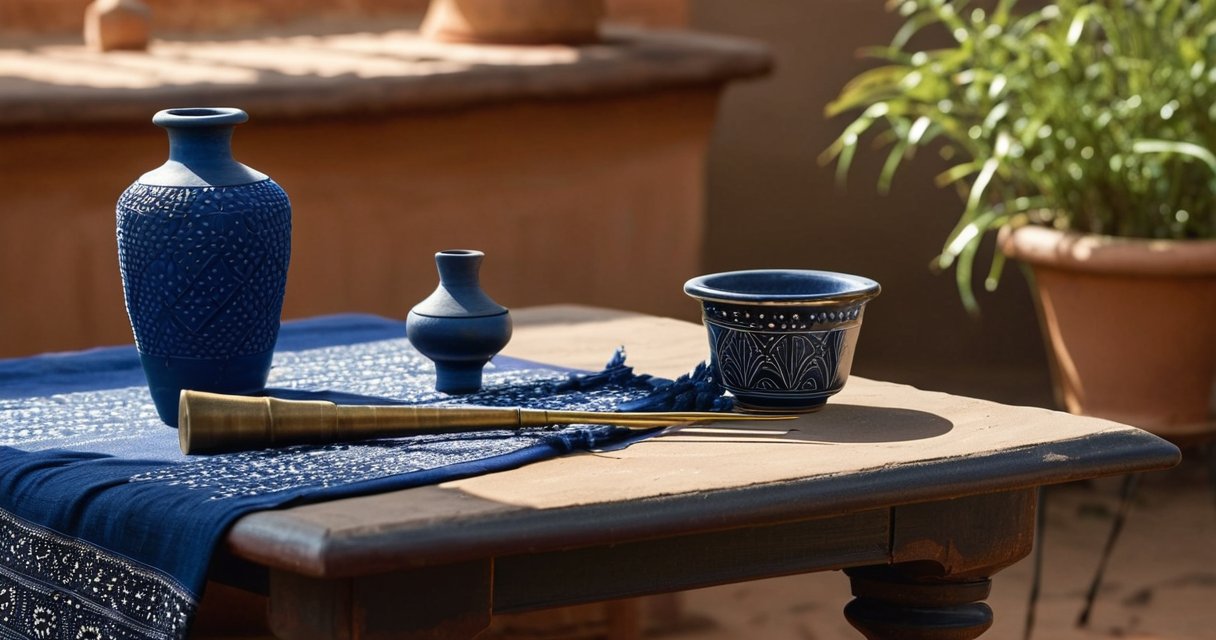
Shweshwe fabric is a unique traditional cotton print that occupies a significant position in South African textiles. Famous for its detailed geometric and floral motifs, Shweshwe represents more than merely a fabric; it serves as a cultural symbol that embodies the rich heritage of Southern African communities. Mainly made from 100% cotton, this fabric is prized for its softness, durability, and vivid indigo-blue dye, though it is now available in an array of colours and styles.
Shweshwe’s history dates back to the 1800s, when European merchants, particularly the French, provided Southern Africa with cotton prints sourced from manufacturing centres like Manchester and Alsace. Initially referred to as ‘blaudruck’ (blue print) in German, this fabric was embraced by the Basotho and quickly became a symbol of cultural pride and identity. It is believed that the name ‘Shweshwe’ is derived from King Moshoeshoe I of Lesotho, who played a key role in disseminating the cloth across the region.
Distinctive patterns hailing from Southern Africa set Shweshwe fabric apart from other textiles. The designs typically showcase detailed and repetitive elements, including circles, diamonds, and floral patterns that are both striking and complex. While the classic colour palette was primarily indigo blue, contemporary Shweshwe fabrics now present a broad spectrum of colours while maintaining their unique character. The fabric’s remarkable designs are produced through a dyeing method that employs synthetic indigo alongside a mechanical screen-printing process, guaranteeing crisp and well-defined patterns.
Shweshwe fabric is an essential element of Southern African culture and fashion, representing tradition, status, and community. It is frequently used to create outfits for important life milestones like weddings, initiation ceremonies, and national festivities. Women typically don intricately designed dresses and skirts crafted from Shweshwe, and the fabric is also featured in accessories and home furnishings. Recently, Shweshwe has attracted global attention, with local designers weaving it into modern fashion collections, connecting traditional and contemporary styles.
At its essence, Shweshwe fabric serves as a vibrant homage to the enduring allure and cultural richness of South African textiles. Its historical relevance, distinctive regional patterns, and ongoing role in modern fashion captivate audiences both locally and internationally, reinforcing its reputation as a treasured cultural jewel of Southern Africa.
History and Origins
Shweshwe fabric boasts a fascinating history that is closely linked to the culture of Southern Africa. It was brought to Africa in the 19th century and is thought to originate from Europe, particularly the textile manufacturing hubs in Manchester, England. This elaborately designed cotton fabric was introduced to South African communities by missionaries and traders from France and Germany.
Originally, Shweshwe fabric was appreciated for its outstanding quality and striking geometric patterns, setting it apart from standard textiles. As time passed, its detailed indigo-blue designs evolved into a symbol of Southern African culture, representing community identity and heritage. The fabric attained a distinctive significance as it was embraced and incorporated into local clothing and rituals.
As the 19th century ended and the 20th century began, Shweshwe evolved from its beginnings into a beloved textile for the Basotho, Xhosa, and many other communities. Its role shifted from mere everyday clothing to a symbol of cultural identity and social standing within these groups. The designs and production techniques of Shweshwe were adapted locally, allowing the fabric to reflect the vibrant cultural richness and pride of Southern Africa.
At present, the tale of Shweshwe conveys a narrative of cultural exchange while also emphasising the fabric’s lasting significance across history. Despite its international origins, it has been wholeheartedly adopted and transformed by Southern African culture, establishing Shweshwe as an essential emblem of identity and heritage within the region.
Distinctive Patterns and Colours
Shweshwe patterns are easily identifiable thanks to their complex geometric designs and the deep significance they hold. Typically produced with a dyeing method that allows for exceptional detail, these patterns frequently showcase recurring motifs like diamonds, squares, triangles, and circles. Each element is carefully organised to form an engaging visual rhythm that is harmonious and attractive. This distinctive traditional design embodies the cultural legacy and narratives that have been handed down over the years.
The colours of the fabric play a crucial role in defining Shweshwe’s essence, much like the patterns do. Historically crafted in hues of indigo blue, brown, and red, contemporary Shweshwe fabric now presents a broader spectrum that features both bright and subtle shades. Lively blues and reds bring a sense of dynamism and thrill, whereas rich browns and soft greens provide a more refined, sophisticated charm. This blend of striking colours and bold geometric designs creates a lively and visually captivating fabric that distinguishes itself within the landscape of African textile heritage.
The blend of intricate Shweshwe designs and vibrant fabric hues captures the essence of this enduring style. They represent both cultural importance and visual appeal, ensuring that Shweshwe fabric remains a perennial favourite in fashion and interior decor across Southern Africa and further afield.

I’m fascinated by the vibrant intersection of contemporary fashion and traditional African craftsmanship. I spend my free time exploring markets, learning about textile techniques, and sharing the stories behind each piece with our readers.