
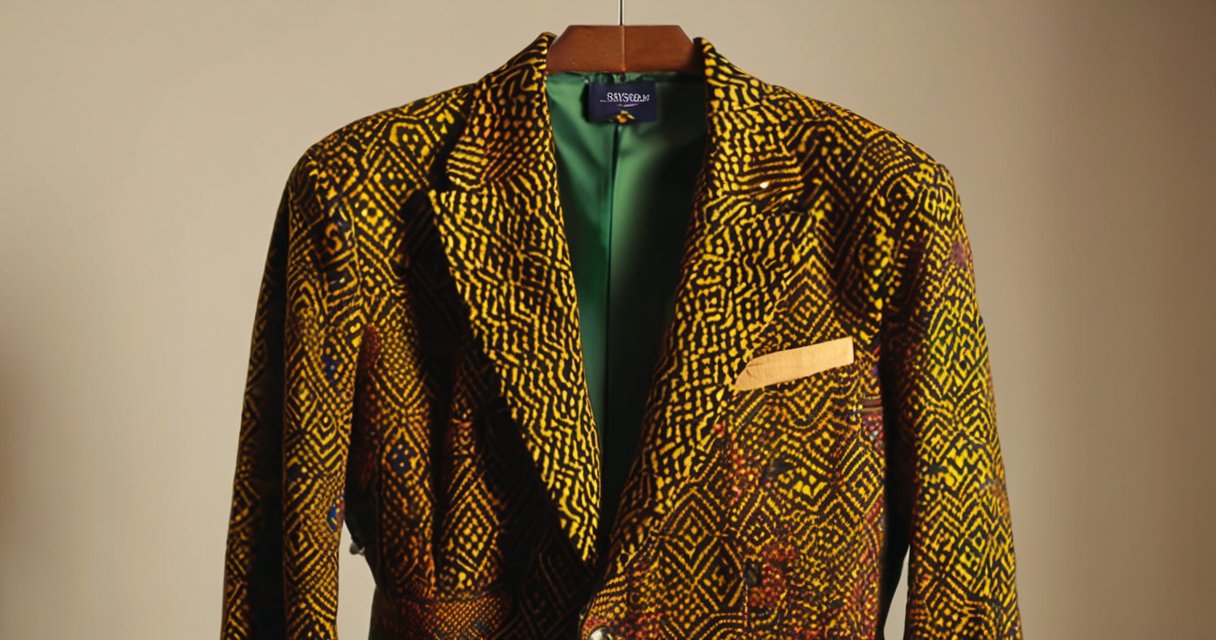
African-inspired fashion for modern professionals is not about swapping a suit for a dashiki and calling it a day. It is a deliberate, nuanced conversation between centuries-old craft traditions and the unspoken dress codes of today’s offices. On the shelves of boutiques in Accra, Lagos, Johannesburg and London, you will find the same Ankara wax print reimagined as a sharply tailored blazer, the same Kente strip woven into the lining of a wool overcoat, the same Bogolan mud-cloth pattern laser-cut into a sleek midi skirt. These pieces carry the weight of lineage, hand-dyed indigo, hand-loomed silk, hand-stitched embroidery, yet they sit comfortably beside a laptop and a Zoom call. The result is workwear that feels both personal and professional, a quiet assertion that heritage and ambition can share the same hanger.
The fabrics that tell the story
At the heart of every African-inspired workwear piece is the fabric. Among the key textiles in the modern professional wardrobe, the craftsmanship behind kente cloth stands out for its intricate patterns and cultural significance. Ankara, often called “African wax print,” is a cotton cloth with a resin finish that gives it a slight sheen and a crisp hand. The prints range from geometric repeats to figurative motifs, calabashes, Adinkra symbols, even portraits of historical figures. Because the fabric is machine-washable and holds a crease, it adapts well to structured garments such as blazers, pencil skirts and wide-leg trousers. Kente, originally woven in narrow strips on a double-heddle loom by the Ewe and Asante peoples, is now produced in wider panels for contemporary tailoring. Its silk or rayon threads catch the light at different angles, making it ideal for statement pieces that need to transition from desk to dinner. Shweshwe, a printed cotton from Southern Africa, has a matte finish and a slightly stiffer drape. It is often used for fitted dresses and jackets that require clean lines and minimal wrinkling.
Beyond these three, newer entrants are gaining ground. Bogolan, or mud-cloth, is being re-engineered in lightweight cotton blends that can be machine-washed without losing the characteristic earthy tones. Kuba cloth from the Democratic Republic of Congo, traditionally a raffia textile, is now woven in fine cotton and used as a subtle lining or pocket square. Each fabric carries a provenance that can be traced back to specific communities, so wearing them becomes a form of cultural literacy as much as sartorial choice.
How to build a capsule workwear wardrobe with African prints
A capsule of six to eight pieces can cover every workday scenario without repetition. Start with a neutral base: a charcoal grey or navy wool-blend trouser in a straight or wide-leg cut. Pair it with a white or cream silk blouse, plain, not printed, to keep the focus on the textile below the waist. Next, add two printed pieces: an Ankara pencil skirt in a small-scale geometric print and a Kente midi dress with a defined waist and three-quarter sleeves. Both should be in colours that complement your skin tone; deep burgundies, ochres and teals work across most complexions. For outerwear, a Shweshwe blazer in indigo or rust adds structure and can be layered over any of the base pieces. Accessories are kept minimal: a leather tote in cognac or black, a pair of low-heeled pumps, and a single piece of jewellery, a beaded cuff or a pair of filigree earrings, so the prints remain the focal point.
The key to making this capsule versatile is colour coordination. Choose one dominant hue from the print and repeat it in a solid accessory. For example, if the Ankara skirt has a mustard stripe, carry a mustard leather portfolio or wear mustard pumps. This creates a visual thread that ties the outfit together without matching prints, which can look costumey in a professional setting. Rotate the printed pieces so that no single item is worn more than twice a week; this keeps the wardrobe fresh and allows the craftsmanship to be appreciated.
Tailoring that bridges continents
The distinction between a polished African-inspired garment and one that appears homemade often hinges on recognizing authentic African crafts and their unique construction techniques. Contemporary African workwear designers are increasingly collaborating with European and Asian tailors to achieve silhouettes that meet international standards of fit. A well-tailored Ankara blazer should have a nipped waist, a slight shoulder pad, and a vent at the back for ease of movement. The lapels should lie flat, and the sleeves should end at the wrist bone. Kente dresses are often cut on the bias to allow the fabric to skim the body without clinging; this requires a pattern-maker who understands how the weave behaves when stretched. Shweshwe, being stiffer, is best used in garments with clean seams and minimal gathering, think A-line skirts and boxy jackets.
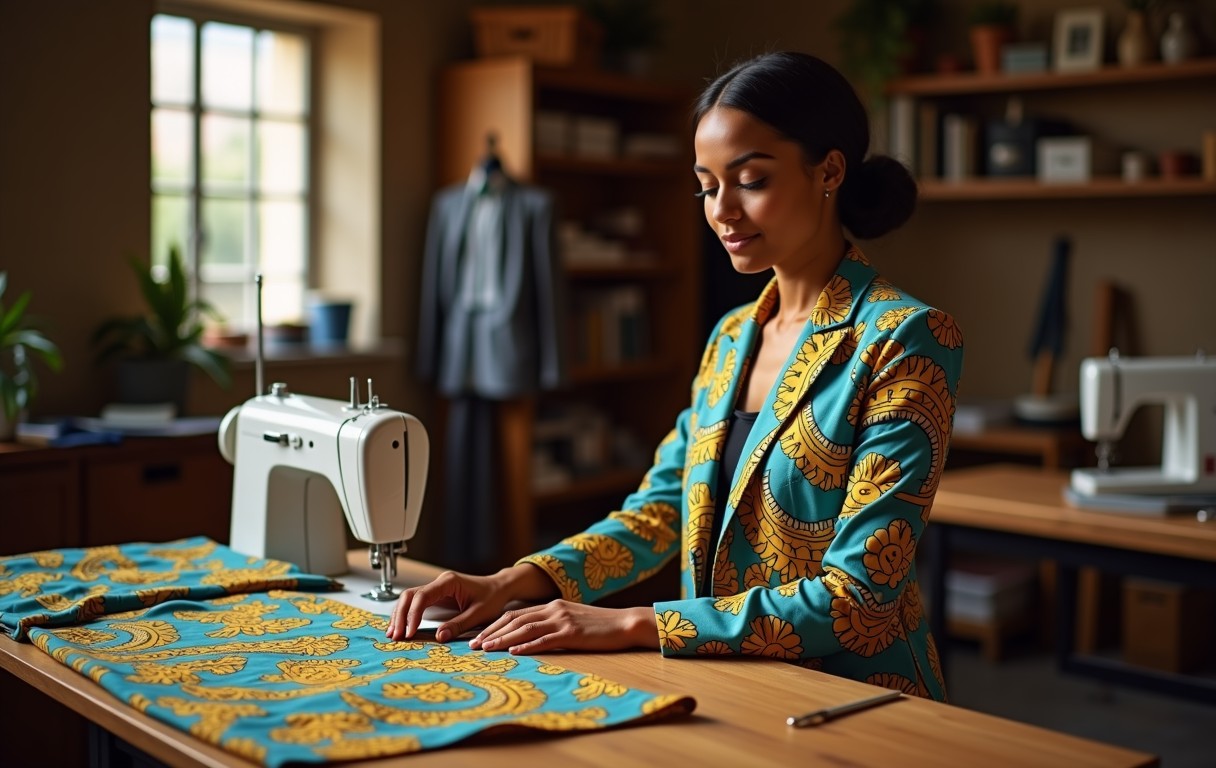
Local tailors in cities such as Accra, Nairobi and Cape Town are now offering made-to-measure services that rival Savile Row. Measurements are taken in centimetres, and clients can choose between a classic fit or a contemporary slim cut. Some ateliers even offer virtual fittings via video call, sending muslin toiles for approval before cutting into the final fabric. For professionals who travel frequently, a single well-tailored suit in a neutral African print can replace three separate outfits, saving luggage space and reducing decision fatigue.
Accessories that carry meaning without shouting
Accessories in African-inspired workwear serve two purposes: they complete the outfit and they carry cultural narratives. A beaded Maasai collar necklace, for instance, can be worn over a plain white shirt to add a touch of colour and texture. The beads are traditionally hand-rolled from recycled glass, and each colour represents a specific virtue, red for bravery, blue for energy, white for peace. A leather satchel made from Ethiopian sheepskin, tanned with natural bark, is both durable and elegant; the grain of the leather develops a patina over time, telling the story of its use. For men, a wooden tie clip carved from West African ebony or a cufflink in the shape of an Adinkra symbol, such as the Gye Nyame, which means “except for God”, adds a layer of meaning without being overt.
Footwear should be understated. A pair of black or brown leather loafers with a low heel works with every print and fabric. For women, a pointed-toe pump in a neutral shade elongates the leg and keeps the focus on the garment. Men can opt for a monk-strap shoe in polished leather; the single buckle adds a touch of formality without competing with the print. Belts should match the shoe colour to create a cohesive line from head to toe. When choosing a bag, consider the scale of the print: a small-scale Ankara print can handle a larger tote, while a bold Kente print needs a sleeker messenger or portfolio.
Where to source authentic African-inspired workwear
Authenticity in this niche means more than just the fabric; it means supporting the artisans and communities that produce it. In Accra, the Makola Market and the Arts Centre are hubs for handwoven Kente and hand-dyed Adinkra cloth. In Lagos, the Nike Art Gallery and the Balogun Market offer Ankara and Aso Oke in every conceivable print. For those outside the continent, online boutiques such as Ushirika in Poland, Cumo London in the UK, and D’IYANU in the US curate collections that are both stylish and ethically sourced. These brands often work directly with cooperatives in Ghana, Nigeria and South Africa, ensuring that a portion of the proceeds goes back to the weavers, dyers and tailors.
When shopping online, look for transparency in the supply chain. Reputable brands will list the country of origin for the fabric, the name of the cooperative or artisan group, and the type of dye used, natural indigo, plant-based pigments, or low-impact synthetic dyes. Avoid mass-produced “African print” garments that are printed in China on polyester; these lack the depth of colour and the tactile quality of authentic textiles. Instead, seek out brands that offer limited runs or made-to-order pieces, which not only support slow fashion but also ensure that your workwear is unique.
Styling for different professional environments
Corporate settings call for restraint. A Kente blazer in navy and gold can be worn over a white shirt and grey trousers for a boardroom meeting. The print is subtle enough to pass muster in conservative environments, yet distinctive enough to signal cultural pride. For creative industries, advertising, design, media, a bolder approach works. An Ankara midi dress in a large-scale print can be paired with a cropped leather jacket and ankle boots for a look that is both artistic and authoritative. Business-casual offices allow for more experimentation: a Shweshwe wrap skirt with a tucked-in silk blouse and a wide belt creates a polished silhouette that still feels relaxed.

For men, the rules are similar. A charcoal suit with a Kente pocket square or a Shweshwe lining adds a touch of individuality without straying into costume territory. A pair of Ankara trousers in a small-scale print can be worn with a navy blazer and a white shirt for a smart-casual look. The key is to keep the rest of the outfit neutral so that the print becomes an accent rather than the entire statement. In all cases, fit is paramount; a poorly tailored garment, no matter how beautiful the fabric, will undermine the professionalism of the look.
Caring for African-inspired workwear
African textiles require more care than mass-produced synthetics, but the effort is rewarded with longevity. Ankara wax print should be washed inside out in cold water on a gentle cycle, or hand-washed with a mild detergent. Hang it to dry in the shade; direct sunlight can cause the colours to fade. Kente, especially silk blends, should be dry-cleaned or hand-washed in lukewarm water with a wool detergent. Shweshwe can be machine-washed on a delicate cycle, but it should be ironed while slightly damp to maintain its crispness. For all fabrics, avoid bleach and fabric softeners, which can break down the fibres and dull the colours.
Storage is equally important. Hang garments on padded hangers to prevent shoulder bumps, and store them in breathable cotton garment bags. Fold knitwear and heavier pieces to avoid stretching. If a garment develops a small tear or loose thread, repair it immediately; African textiles are often woven or printed in a way that makes repairs difficult once the damage spreads. For stubborn stains, spot-clean with a mixture of water and white vinegar, or take the garment to a professional cleaner who specialises in natural fibres.

I’m fascinated by the vibrant intersection of contemporary fashion and traditional African craftsmanship. I spend my free time exploring markets, learning about textile techniques, and sharing the stories behind each piece with our readers.