
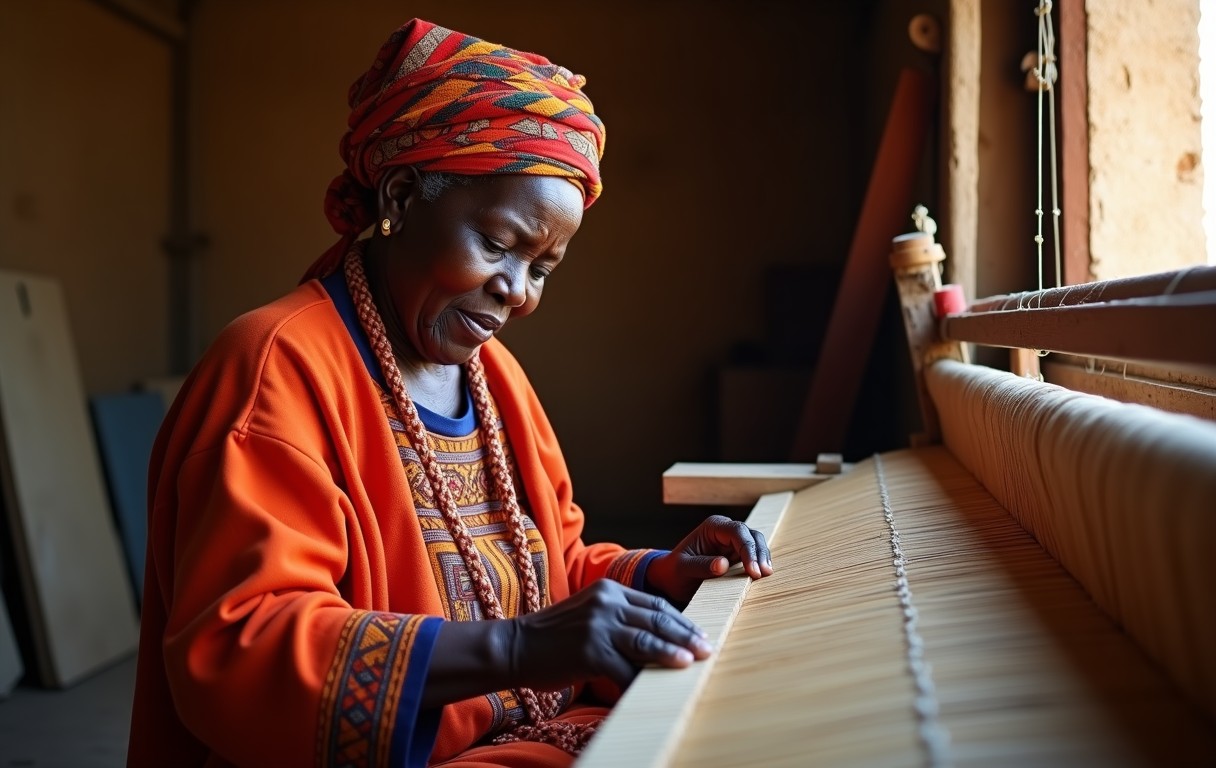
Elders carry the memory of cloth, bead, wood and dye that have shaped African style for centuries, and their presence in workshops today ensures that each stitch and motif remains rooted in community identity.
Elders as custodians of textile traditions
In many African societies, the tradition of African beadwork is passed down through generations by the oldest artisans, who serve as living archives of cultural heritage. Their knowledge of loom construction, fibre selection and seasonal timing is rarely recorded in books, yet it survives through daily practice. When a village elder demonstrates how to spin cotton from the seedpods of a particular plant, the act conveys not only a technical step but also a link to the land that supplies the raw material.
Because elders have witnessed multiple harvest cycles, they can advise on subtle variations in fibre quality that affect colour absorption. This insight proves vital for designers who wish to create garments that retain authenticity while meeting modern performance standards. By consulting the seasoned weaver, a fashion label gains access to a depth of expertise that cannot be replicated by laboratory testing alone.
Oral transmission and the language of pattern
Patterns that adorn Kente, Bogolanfini or Shweshwe fabrics are not merely decorative; they encode stories of migration, status and cosmology. Elders narrate the meaning behind each motif while guiding apprentices in the precise repetition of geometric forms. The spoken explanations act as a mnemonic device, allowing learners to recall complex sequences without written diagrams.
Research on intergenerational learning shows that oral instruction enhances retention of motor skills, especially when coupled with rhythmic chanting. In a typical workshop, an elder may chant a cadence that mirrors the beat of the loom, synchronising the learner’s movements with the cultural pulse of the community.
Apprenticeship rituals in African craft villages
Entry into a craft lineage often begins with a formal ceremony that marks the apprentice’s commitment to the elder’s guidance. The ritual may involve the presentation of a symbolic object, such as a carved wooden spindle, and the recitation of a proverb that underscores humility and perseverance. These rites reinforce the social hierarchy that underpins knowledge transfer.
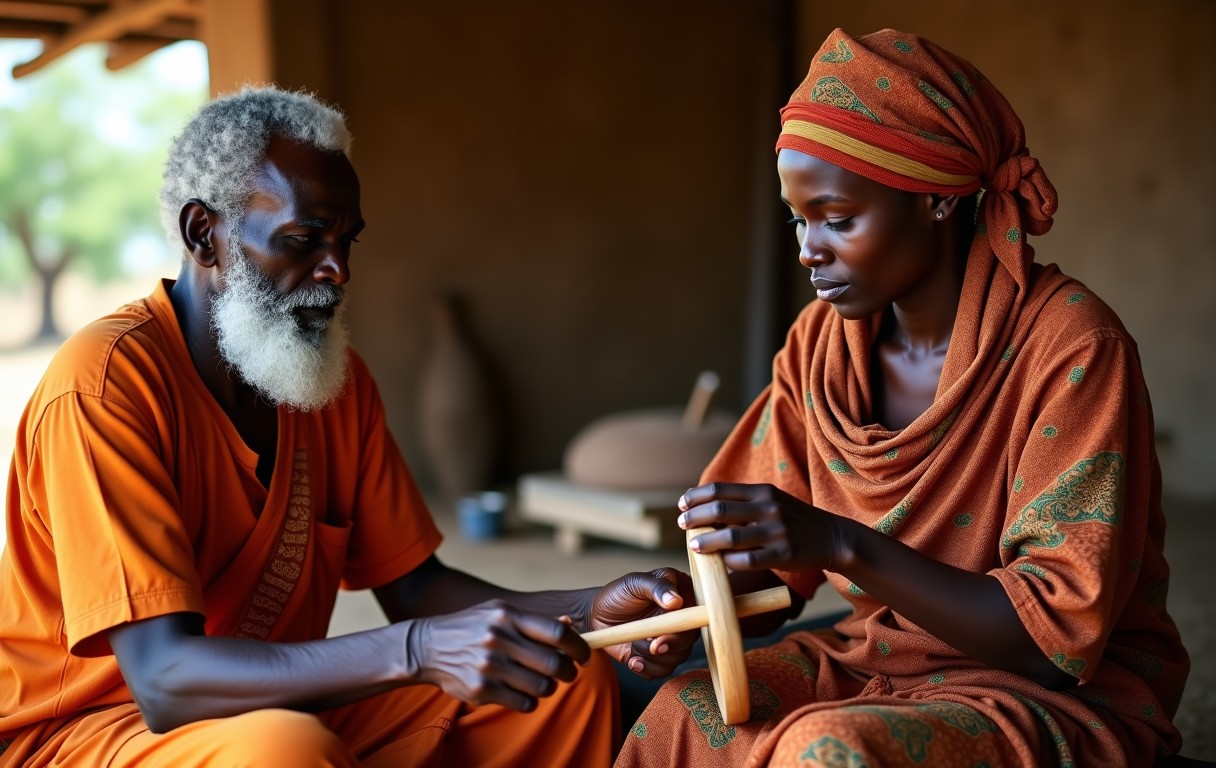
During the apprenticeship, the elder closely monitors the apprentice’s technique, offering corrective feedback that respects the learner’s dignity. Studies of artisan communities in West Africa reveal that such personalised mentorship reduces error rates by up to thirty percent compared with group instruction, highlighting the efficiency of one‑to‑one teaching.
Intergenerational collaboration in contemporary fashion
Modern designers increasingly seek partnerships with elder artisans to infuse collections with heritage authenticity. A collaborative process may begin with the elder presenting a basket of traditional textiles, followed by the designer proposing adaptations that align with current market trends. The resulting garments often blend historic motifs with contemporary silhouettes, appealing to consumers who value both novelty and cultural depth.
These collaborations also provide elders with a platform to showcase their craft beyond the village, generating income that supports the continuation of their practice. When a renowned Parisian fashion house sources hand‑woven strips from a Senegalese elder, the exposure can lead to new orders, workshops and even training programmes that sustain the craft for future generations.
Digital tools that extend elders’ reach
While the core of craft transmission remains tactile, technology now offers elders avenues to document and disseminate their knowledge. Mobile applications enable the recording of weaving techniques in video format, preserving the visual nuance of hand movements that text alone cannot capture. Elders who embrace such tools become ambassadors of their heritage in the digital sphere.
Online marketplaces also allow elder artisans to sell their work directly to a global audience, bypassing intermediaries that often dilute cultural value. By curating product descriptions that include the story of the craft, elders maintain narrative control and ensure that buyers understand the cultural significance of each piece.
Health and wellbeing benefits for elder artisans
Engagement in craft activities supports physical dexterity, cognitive function and social connectivity among older community members. A study of senior weavers in a UNESCO Creative City of Crafts demonstrated that regular participation in loom work correlated with lower incidences of age‑related ailments. The repetitive motions of weaving promote fine motor skills, while the communal environment combats isolation.
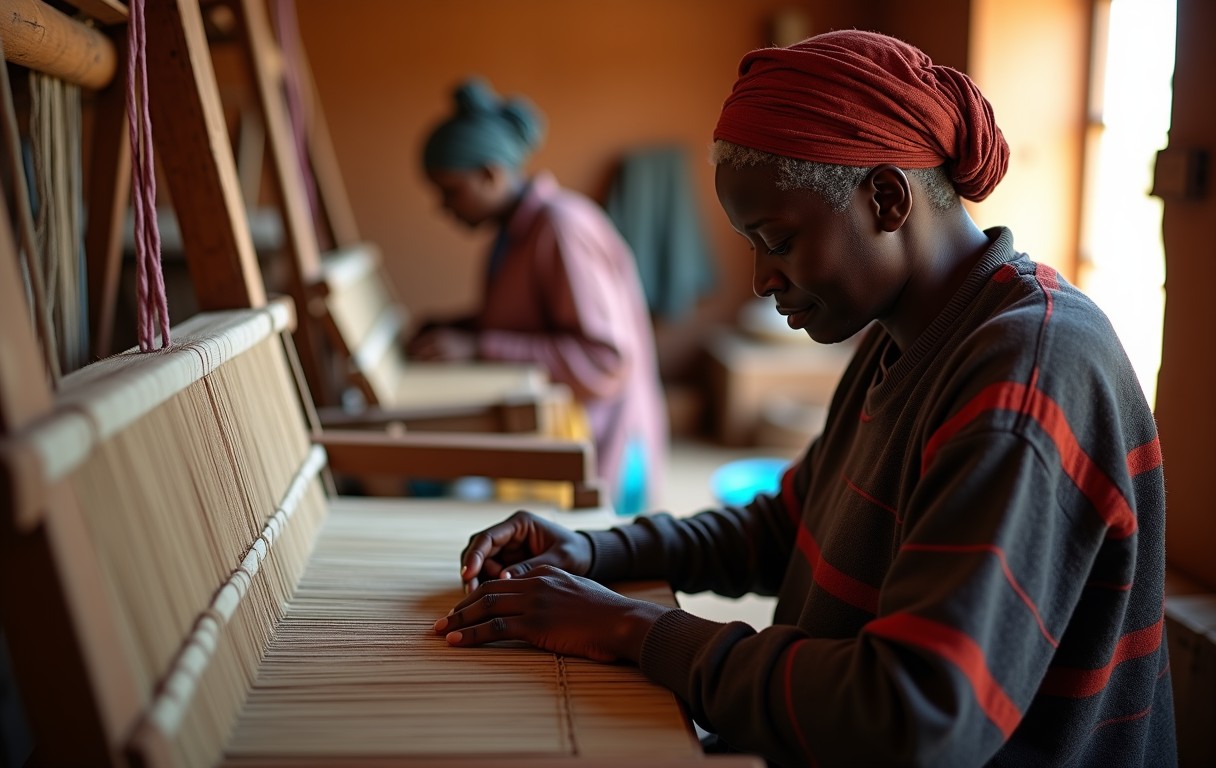
Beyond the individual, the presence of active elders reinforces community cohesion. Their role as mentors creates a sense of purpose, fostering intergenerational solidarity that contributes to overall communal resilience. When elders share their expertise, they also model a lifestyle that values patience, perseverance and creative expression.
Future pathways for safeguarding craft knowledge
To protect the continuity of African fashion heritage, policies must recognise elders as essential custodians and allocate resources for their participation in education programmes. Grants that fund elder‑led workshops, travel subsidies for inter‑village exchanges and incentives for documenting oral histories can all reinforce the transmission chain.
Moreover, integrating elder expertise into formal curricula at fashion institutes bridges the gap between academic study and lived tradition. When students spend a semester under the tutelage of a master beadworker, they acquire skills that textbooks cannot convey, ensuring that the next generation of designers respects the origins of their inspiration.

I’m fascinated by the vibrant intersection of contemporary fashion and traditional African craftsmanship. I spend my free time exploring markets, learning about textile techniques, and sharing the stories behind each piece with our readers.