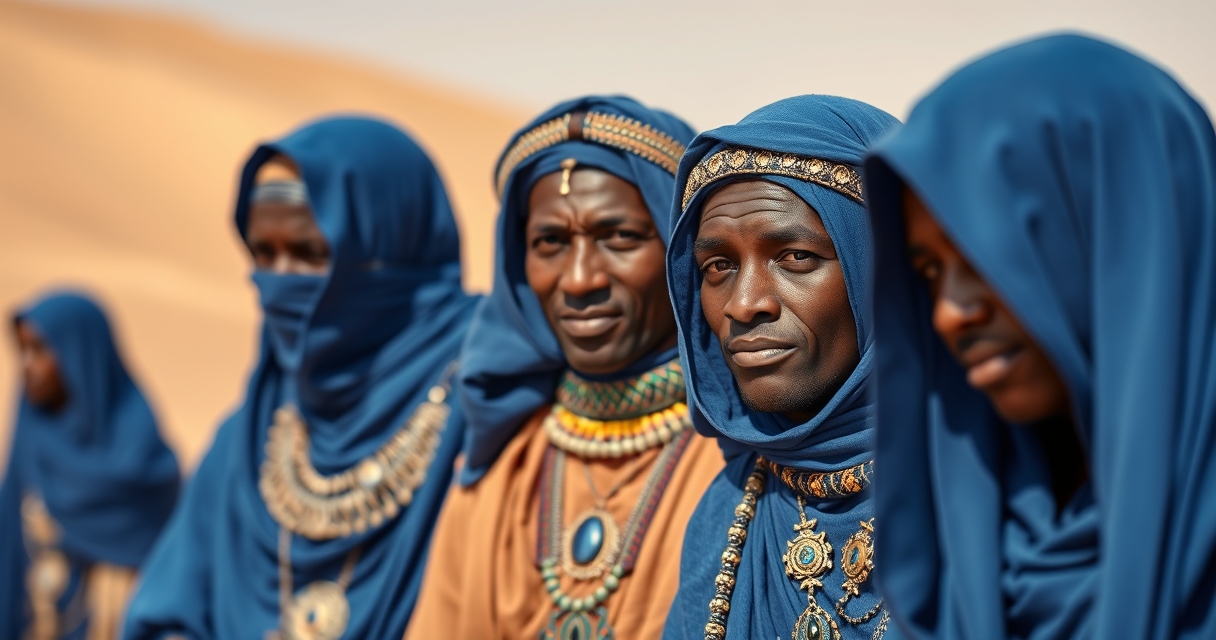
The Tuareg people, often called the “Blue Men of the Sahara” for their indigo-dyed veils, have crafted jewellery that is as much a statement of identity as it is of artistry. Their silverwork, passed down through generations, carries the weight of nomadic traditions, desert symbolism and the quiet resistance of a culture that refuses to be erased. For those drawn to ethnic fashion, Tuareg jewellery represents African craftsmanship as wearable art, offering more than adornment; it is a wearable archive of stories, trade routes and the unyielding spirit of the Sahara. Each piece, whether a cross of Agadez or a delicate amulet, tells a story that begins in the hands of a smith and ends on the skin of someone who values heritage over trends.
The historical roots of Tuareg silverwork
The tradition of Tuareg jewellery stretches back over a thousand years, rooted in the trans-Saharan trade networks that once connected West Africa to the Mediterranean. Silver, introduced by Arab traders in the 7th century, became the metal of choice not only for its malleability but for its cultural significance. The Tuareg, who are part of the larger Amazigh or Berber family, adopted silver as a symbol of purity and protection, a material that could be shaped into talismans against the harsh desert environment. Unlike gold, which was reserved for royalty and the elite, silver was accessible to the nomadic communities, allowing artisans to create pieces that were both functional and deeply personal.
By the 15th century, the cross of Agadez, perhaps the most recognisable Tuareg symbol, emerged as a marker of identity. Legend claims it was gifted by a Tuareg queen to her people as a compass, its four arms pointing to the cardinal directions. While its exact origins remain debated, the cross became a staple of Tuareg craftsmanship, with each of the 21 known variants representing a different oasis or clan. These pieces were not merely decorative; they were maps, heirlooms and tokens of belonging in a landscape where movement was constant and roots were carried in the hands rather than the earth.
The decline of trans-Saharan trade in the 19th century, coupled with French colonial rule, threatened the survival of Tuareg silversmithing. Many artisans were forced to abandon their craft as nomadic life became increasingly difficult. Yet, the tradition persisted in secret, passed down in families who refused to let their skills disappear. Today, the revival of Tuareg jewellery is as much about cultural preservation as it is about economic survival, with cooperatives like those in Niger and Mali working to ensure that the knowledge of the old smiths is not lost to time.
Symbolism and meaning in Tuareg designs
Tuareg jewellery is a language without words, where every motif carries a specific meaning tied to the desert, spirituality and social status. The cross of Agadez, for instance, is not just a geometric shape but a symbol of protection, its four arms representing the four elements or the four corners of the earth. Some interpretations suggest it also signifies the four pillars of Tuareg society: family, honour, hospitality and faith. The variations in design, from the simple “Ténéré” cross to the more intricate “Ingall,” reflect regional differences and the personal touch of the artisan, making each piece unique.
Amulets, or “khomssa,” are another cornerstone of Tuareg jewellery, often worn as pendants or bracelets. These small, silver containers hold verses from the Quran or herbal remedies, serving as both spiritual shields and practical tools. The “khomssa” is typically triangular or rectangular, with a hinged lid that opens to reveal its contents. Women, in particular, wear these amulets as a sign of their role as protectors of the family, a tradition that dates back centuries. The designs often incorporate filigree work, a technique where thin silver wires are twisted and soldered to create delicate, lace-like patterns. This level of detail is not merely aesthetic; it reflects the Tuareg belief that beauty and function should never be separated.
Animal motifs are also prevalent in Tuareg jewellery, with camels, scorpions and snakes appearing frequently. The camel, a lifeline in the desert, symbolises endurance and resilience, while the scorpion, despite its danger, represents protection. Snakes, often depicted in coiled forms, are associated with fertility and rebirth, a nod to the cyclical nature of life in the Sahara. These symbols are not chosen at random; they are deliberate choices that connect the wearer to the land and its rhythms. For those outside the culture, these pieces offer a way to engage with Tuareg cosmology, turning a simple necklace or ring into a conversation about heritage and belief.
Techniques and materials of Tuareg artisans
The craftsmanship behind Tuareg jewellery reflects how African beadwork is passed down generations through a blend of ancient techniques and resourceful adaptation. Silver, the primary material, is often sourced from melted-down coins or recycled jewellery, a practice born out of necessity in a region where raw materials are scarce. The smiths, traditionally men, work with handmade tools, including hammers, anvils and blowpipes, to shape the metal. One of the most distinctive techniques is “repoussé,” where the silver is hammered from the reverse side to create raised designs. This method allows artisans to produce intricate patterns without the need for advanced machinery, relying instead on skill and patience.
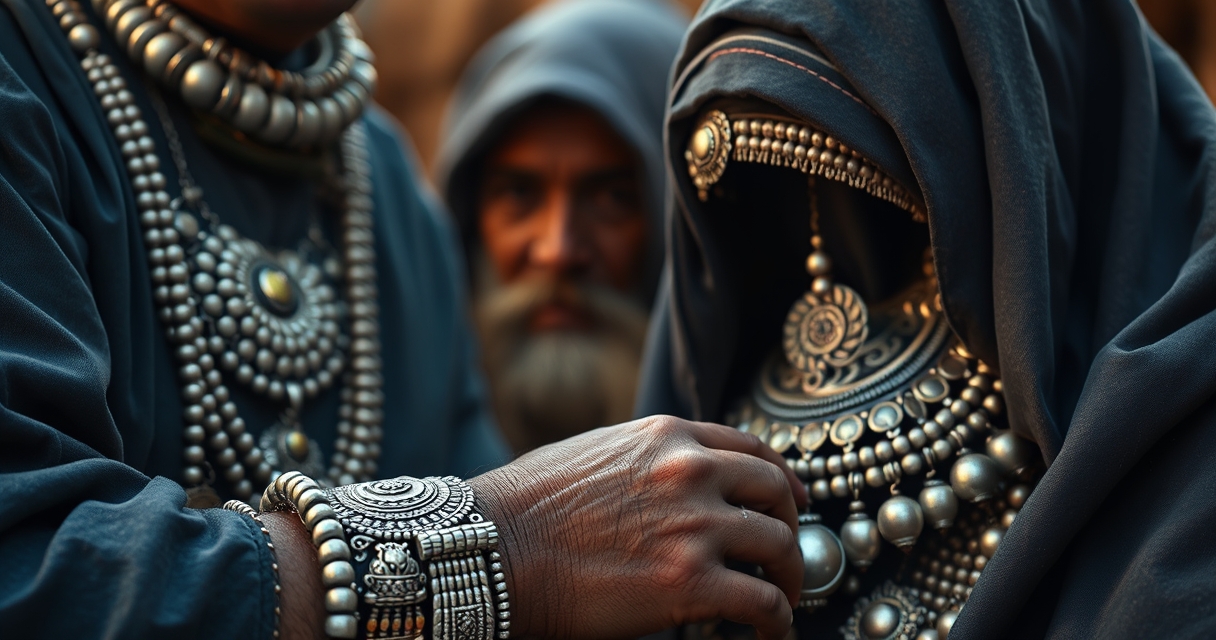
Filigree, another hallmark of Tuareg jewellery, involves twisting and soldering fine silver wires into elaborate designs. This technique requires a steady hand and an eye for detail, as the wires must be heated just enough to fuse without melting. The result is a piece that appears almost weightless, with a delicacy that belies the strength of the metal. Inlay work is also common, where semi-precious stones like agate, carnelian or turquoise are set into the silver. These stones are not chosen for their monetary value but for their symbolic meanings; turquoise, for example, is believed to ward off the evil eye, while carnelian is associated with vitality and courage.
The process of creating Tuareg jewellery is often communal, with artisans working in small groups under the shade of a tent or tree. The smiths begin by sketching their designs in the sand, a practice that allows for spontaneity and improvisation. Once the design is finalised, the silver is heated in a charcoal fire, a method that has remained unchanged for centuries. The final step is polishing, which is done using natural abrasives like sand or pumice. The result is a piece that gleams with a soft, organic lustre, a testament to the hands that shaped it. For collectors and enthusiasts, understanding these techniques adds depth to the appreciation of Tuareg jewellery, transforming it from a mere accessory into a piece of living history.
Tuareg jewellery in contemporary ethnic fashion
In recent years, Tuareg jewellery has found a new audience among designers and fashion enthusiasts who value its authenticity and craftsmanship. Brands like Mystics and Sages, which specialise in artisanal jewellery, have incorporated Tuareg designs into their collections, offering pieces that bridge the gap between tradition and modernity. These collaborations are not without controversy; some argue that commercialising Tuareg jewellery risks diluting its cultural significance. However, when done ethically, such partnerships can provide much-needed income for Tuareg artisans while introducing their work to a global market.
The appeal of Tuareg jewellery in contemporary fashion lies in its versatility. A cross of Agadez, for example, can be worn as a statement necklace with a minimalist outfit or layered with other ethnic pieces for a bohemian look. The geometric designs and bold lines of Tuareg jewellery complement both casual and formal attire, making it a favourite among those who seek to add a touch of cultural depth to their wardrobe. Designers like Gaia Repossi have drawn inspiration from Tuareg motifs, reinterpreting them in ways that resonate with modern aesthetics. Her collections often feature clean, architectural lines that echo the symmetry of Tuareg silverwork, proving that traditional designs can evolve without losing their essence.
For those interested in incorporating Tuareg jewellery into their style, it is worth seeking out pieces from fair-trade cooperatives or directly from Tuareg artisans. These sources ensure that the craftsmanship is authentic and that the profits support the communities that have preserved these traditions for generations. Online platforms like Etsy and specialised boutiques offer a range of Tuareg-inspired pieces, from handcrafted silver rings to beaded necklaces made with locally sourced materials. When purchasing, look for details like the artisan’s signature or the specific region where the piece was made, as these elements add to the story and value of the jewellery.
The role of women in Tuareg jewellery traditions
While Tuareg silversmiths are traditionally men, women play a crucial role in the creation, wearing and preservation of jewellery within the culture. In Tuareg society, jewellery is not merely decorative; it is a marker of social status, marital status and even personal achievements. Women, in particular, use jewellery to express their identity and autonomy, with certain pieces reserved for specific life stages. For example, a young woman might receive a “takouba,” a silver bracelet, as a gift upon reaching adulthood, while a married woman might wear a “tcherot,” a large, ornate necklace, to signify her role as a matriarch.
The act of wearing jewellery is also a form of storytelling. Tuareg women often layer multiple pieces, each with its own meaning, to create a visual narrative of their lives. A necklace might combine an amulet for protection, a cross for guidance and a pendant for fertility, each piece chosen for its symbolic resonance. This practice is not static; women add or remove pieces as their circumstances change, making their jewellery a dynamic reflection of their journey. In this way, Tuareg jewellery becomes a living tradition, one that evolves with the wearer rather than remaining fixed in the past.
Women are also the primary custodians of the oral histories associated with Tuareg jewellery. They pass down the meanings of symbols, the techniques of crafting and the stories behind each piece to younger generations. This transmission of knowledge is vital in a culture where written records are rare, and memory is the primary archive. In recent years, women have also begun to take on more active roles in the production of jewellery, particularly in the creation of beaded pieces. These beads, often made from glass or semi-precious stones, are strung into necklaces and bracelets that complement the silverwork. The rise of women-led cooperatives has further empowered female artisans, allowing them to earn an income while preserving their cultural heritage.
Ethical sourcing and supporting Tuareg artisans
For those who wish to own a piece of Tuareg jewellery, ethical sourcing is paramount. The rise in demand for ethnic fashion has led to a proliferation of mass-produced imitations, often made with cheap materials and little regard for the cultural significance of the designs. These pieces not only lack the craftsmanship of authentic Tuareg jewellery but also undermine the livelihoods of the artisans who rely on their craft for income. To avoid supporting exploitative practices, it is essential to purchase from reputable sources that work directly with Tuareg communities.
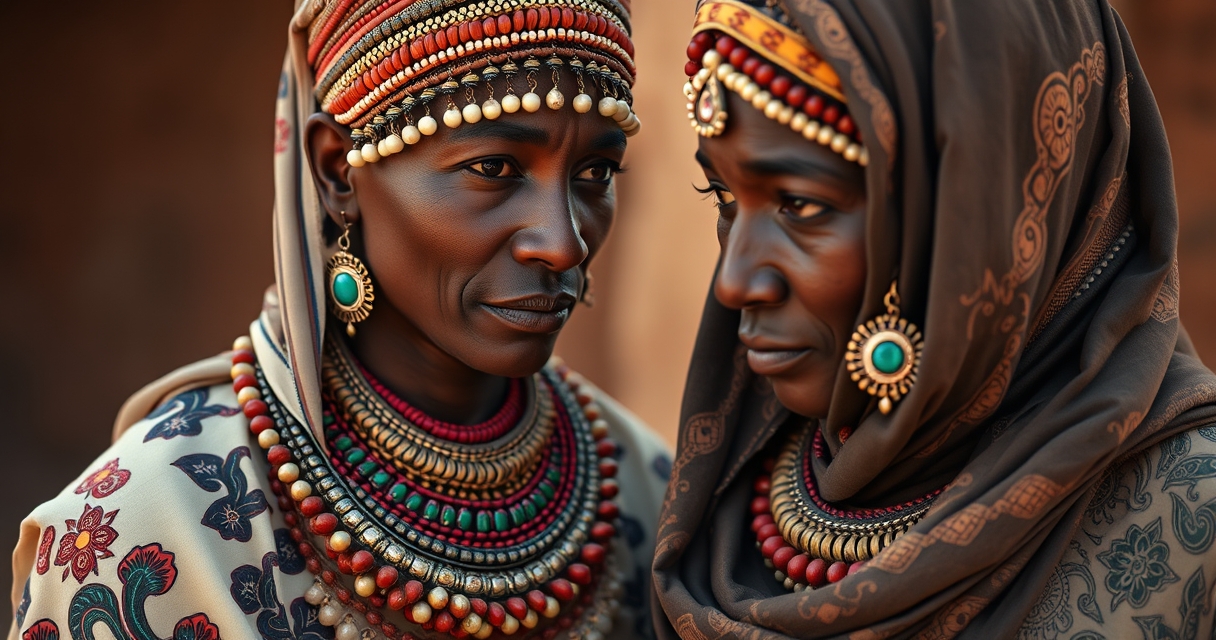
One of the most reliable ways to ensure ethical sourcing is to buy from fair-trade cooperatives, which operate in countries like Niger, Mali and Algeria. These cooperatives provide artisans with fair wages, safe working conditions and access to markets that they might not otherwise reach. Organisations like the Tuareg Women’s Cooperative in Agadez, Niger, have been instrumental in preserving traditional techniques while empowering women to take control of their economic futures. When purchasing from these cooperatives, buyers can often trace the origin of their piece, from the hands of the artisan to the final product, ensuring transparency and authenticity.
Another option is to support brands that collaborate with Tuareg artisans on a fair and equitable basis. Companies like Mystics and Sages and Tighanimine, for example, work directly with Tuareg smiths to create collections that honour traditional designs while appealing to contemporary tastes. These brands often provide detailed information about the artisans they work with, including their stories and the techniques they use. By choosing to buy from such sources, consumers can be confident that their purchase is not only a beautiful addition to their collection but also a meaningful contribution to the preservation of Tuareg culture.
Caring for and styling Tuareg jewellery
Tuareg jewellery, with its intricate designs and delicate materials, requires careful handling to maintain its beauty and longevity. Silver, in particular, is prone to tarnishing when exposed to air and moisture, so it is important to store pieces in a dry, airtight container when not in use. A soft cloth, such as those used for polishing eyeglasses, can be used to gently remove any tarnish that does form. For pieces with inlaid stones, avoid using harsh chemicals or abrasive cleaners, as these can damage both the silver and the stones. Instead, a damp cloth with a mild soap solution can be used to clean the surface, followed by a thorough drying with a soft towel.
When styling Tuareg jewellery, the key is to let the pieces speak for themselves. The bold designs and symbolic meanings of Tuareg jewellery make them ideal for making a statement, so they are best paired with simple, understated clothing. A cross of Agadez, for example, can be worn as a standalone necklace with a plain white shirt or a flowing caftan, allowing the piece to take centre stage. For a more layered look, Tuareg jewellery can be combined with other ethnic pieces, such as Moroccan beads or Maasai earrings, to create a rich, textured ensemble. The contrast between the geometric precision of Tuareg silverwork and the organic forms of other ethnic jewellery can result in a striking visual effect.
For those who wish to incorporate Tuareg jewellery into their everyday wardrobe, smaller pieces like rings or bracelets are a practical choice. A silver ring with a filigree design can add a touch of elegance to a casual outfit, while a beaded bracelet can be stacked with other bangles for a bohemian look. When travelling, it is advisable to pack jewellery in a padded case to prevent damage, and to avoid wearing pieces in environments where they might be exposed to saltwater or chlorine, as these can accelerate tarnishing. With proper care, Tuareg jewellery can last for generations, becoming a cherished heirloom that carries the stories and traditions of its makers.

I’m fascinated by the vibrant intersection of contemporary fashion and traditional African craftsmanship. I spend my free time exploring markets, learning about textile techniques, and sharing the stories behind each piece with our readers.